Showing posts with label Missions. Show all posts

Monday, July 15, 2024

Uganda Mission Trip


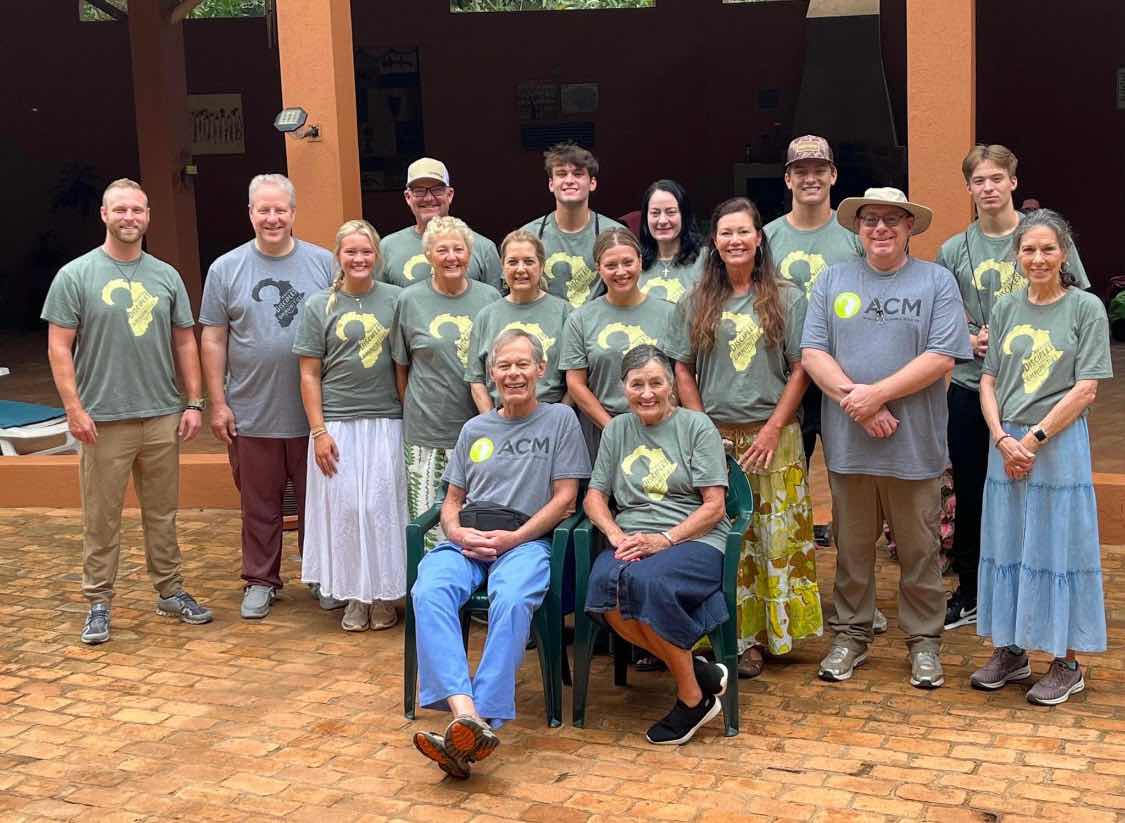
Celebrate with us on the return of a wonderful Uganda mission trip. 18 of us (9 from our church, 5 relatives, and 4 joining us through Africa Children’s Mission, or ACM) enjoyed an amazing journey, led by teams leaders Bruce and Evonne Cunningham. We were registered with UMVIM (United Methodist Volunteers in Mission) and hosted by the ecumenical organization of ACM.

We had many projects, all while the people of Uganda shared Christian faith so openly and passionately with us. We opened the dental clinic we sponsor for several days, visited dozens of children on behalf of their sponsors in our church at home, “mudded” a new outdoor kitchen for an elderly lady, built a well for a village that had not had fresh water for 8 months, and led “Activity Day” (think Vacation Bible School) at a local school. We visited other ministries connected to ACM, the Proverbs 31 Women and the Cornerstone Leadership Academy. I taught pastor’s school for two days with 50 African pastors (half of whom were women clergy), and we worshipped and had “dinner on the grounds” at a church where I was invited to preach. We also made various little visits to local schools near the ranch.


After the ministry work, we enjoyed a day and a half on safari before heading home. We saw the most powerful waterfall near the very beginning of the Nile River, the body of water around which the park was designed.  

We are so blessed to have had this experience. If you’ve never been in a mission trip, I encourage you to go on one. It changes your life.


Monday, February 11, 2019

Ghana Always Teaches Me Something New

This is my column which appeared on February 2, 2019, in The Arab Tribune.

It was my third trip to Ghana, and I guess that means it’s becoming a habit. If you do something once, it can be a fluke, and if you do it twice, it’s still just a pattern. But going to Ghana has now become a habit indeed, and it’s a holy habit I’m glad to have.

In one way or another, the church I serve has supported the Eugemot orphanage in the Volta Region of eastern Ghana since it was founded fifteen years ago. But four years ago, the Spirit led us to organize an annual mission trip to put some hands and feet to our prayers and support. I personally got to go on three of the four. Our last mission team came home just a couple of weeks ago.

I thought I had learned what there was to learn on my other two trips, and I was there to support the others like a good pastor should. But as usual, I was wrong.

The newly found wonder I brought back with me this time is capsulated in one simple prayer. One of the older orphans who had been away at school came home for the holidays and went with us to guide us on our tour of the waterfall for our Sunday afternoon Sabbath time. He met our team for lunch beforehand, and we asked him to pray. He paused and told us he would like to teach us the prayer Mama Eugenia had always taught them at the orphanage.

He prayed, “Father, we invite you to come and eat with us. Amen.” I loved that prayer. He told us that at night, they also say “Father, we invite you to come and sleep with us.” There it is.

I have never heard such profound simplicity in prayer, which reflects amazing trust in the very presence of God in our midst. Yes, we know God is the one from whom all things come.

In the churches in our country, we had just finished the busy Christmas holidays honoring Jesus our Emmanuel, which means “God with us.” And our prayers are usually (if we are honest) asking him to bless what we are doing ... from far, far away.

Not that day. Not Bless (that is the young man’s name). He prayed to the “God who comes”, as Christian spiritualist Carlo Carretto describes it. God is a God who eats with us, who sleeps with us, and who holds us close.

As I reflect on the trip as a whole, I suppose that simple, beautiful prayer has become a prism through which I observed the beautiful colors of gratitude in the hearts of these people. They are thankful for the One who eats and sleeps with us, present in the rhythms of every day.

There is something about stepping out of my own culture, and into another place, that helps me see faith come alive. As one of our participants said, “when I go to Ghana, I see God working in ways I never see at home.”

God is here as well as there, of course. But I wonder if we have our spiritual antennas up to detect God’s presence. All of the experiences of this year’s mission trip led me back to this basic truth that Ghanians know in their bones. God is real and God is present.

We were there during the holidays, and while Christmas is less of a fuss, their New Year has energy like an American Thanksgiving, except it’s even better. They thank God over and over for the blessings of the past year, and they ask God to be with them this coming year. Most churches offer Watch Night services that go on for hours up until midnight.

At the orphanage, we built a big bonfire and enjoyed a drum circle, with dancing and singing that takes me to yet another place of heavenly bliss. On New Year’s Day, everyone wears white and we have a great feast, with traditional rice dishes and barbecued meat. The orphanage puts on a show, with memory verses, dances, and encouraging testimonies by some of the older young women and men who have come home.

What I began to see this year is that this gratitude is not just about the holiday; it’s imbued in everyday life. One young woman showed us the river where her family in the village washes their clothes, washes themselves, and gets their water for cooking and drinking.

Once again, I noticed local shops and businesses out on the road, which have openly religious names like “Salvation Mini-Market” where I bought some Milo (a chocolate milk drink). Once again, we shared food relief with families who were so grateful to be alive.

This year, we met a young woman in a wheelchair and visited another woman who could walk again after many years. We celebrated the story of how prayer had healed her. One of our participants gave the woman her metal cane to replace the hand made wooden stick she was using to show us the glory of what God can do. It was inspiring.

We visited churches that were so incredibly hospitable toward us. One was simple and beautiful, made of wooden slats and a thatched roof. In another, they recognized me from when I preached there two years ago and ushered me up to the stage to sit behind the pastor while he was preaching. Then the pastor introduced me (this was a really strange experience, since I had never met him) and I offered a gift for the new mission house they are building.

They treated me as if I honored them with my presence, but I’m the one that is honored. I get to worship with a faith family that is alive with song and drums and dance.

I was really excited about seeing the new orphanage, finally. The dorms had been under construction by work crews from England for years, while the orphanage had been in a three bedroom rental home down the road. Children had spent years stacked like sardines, but now there was spacious room.

It was heartwarming to see a vision become reality, to see the barn we built for them in view just behind the new orphanage wall, and to watch the running water we helped pay for in use. We watched them installing the new whiteboards we were donating for the classrooms at the school in front of the orphanage, which had been built by schools and churches from good old Alabama.

The highlight, of course, was spending time with the orphans themselves. One little boy just couldn’t get enough of my sunglasses and didn’t mind posing for pictures when he looked so cool. We played card games, did crafts with beads, and tussled with the little ones.

This year, there was a piano in the new common room, so I was in my element and we sang some songs. I got to connect at the keyboard with one of the school officials, who was a church music director on the side and asked me to play hymns he had been learning. Mama Eugenia’s son and one of the older girls were wonderful at harmony. The kids just sang and sang.

All these experiences that unfolded during the week were wrapped up together in that simple prayer that kept mulling around in my mind. Father, we invite you to sing with us, to play with us, to work with us. You are here. We depend completely on you.

I brought home another Gye Nyame, a West African symbol which means “except God.” For them, it is a national symbol. It means we could never have what we have, or do what we do, or be who we are, except for God. “Except God.”

I’m looking at one on the wall in my home as I write. Gye Nyames remind me that in so much of American Christianity, we only consider ourselves somewhat dependent on God. It’s up to us to make a difference, rely on our smarts, and pull ourselves up by our own bootstraps. Then we pause to trust God for the rest.

But not in Ghana. God is a God who does it all with us.

Maybe we can get back to that spiritual place in America again. Maybe I can get back to that place in my heart again.

Steve West is a husband, father, minister, musician, and writer who pastors Arab First United Methodist Church. His blog, “Musings of a Musical Preacher,” is found at www.stevewestsmusings.blogspot.com.
Tuesday, February 5, 2019

Ghana Trip Made the Papers

I am blessed with the opportunity to write a column for The Arab Tribune. I was pleasantly surprised, however, that they were able to make room for the pictures. Celebrate with us a life-changing journey.


Friday, December 21, 2018

There's more than one way Christ comes to us


This is my column that appeared in “The Arab Tribune” on Wednesday, December 19, 2018.

Every year during the holidays, it seems that one story, one experience, or one conversation captures my imagination. It's not usually any of the gifts, or all the food (as much as there is of that to be impressed by), or the lights or the parties.

It's something unusual, something unexpected, and something a bit heart-warming. This year, it was a phone call.

Last Saturday, our church held our annual "Christmas and Beyond" party where we hosted most of the 150 children and their families that we help with Christmas. We had done all the shopping in advance, so we shared a Christmas program of songs and games, treated everyone to breakfast, and opened a Christmas thrift shop for their families to enjoy.

When it was all over, I got a phone call from one of my parishioners with a story I'll never forget. During the morning's activities, a grandmother who had brought her three grandchildren to Christmas and Beyond told a story to the volunteers who were fixing her coffee.

She said that the night before, her two nephews, who are ages 21 and 23, were at her house, and they asked her grandchildren what they were going to do on Saturday. The kids said they were going to a "Christmas party" at the Methodist church.

The nephews replied, "Oh, you will have a great time! We went there when we were your age, and they made us pancakes, and we heard the Christmas story, and everyone was so nice to us! You will love it!" One of the nephews said "It is my favorite Christmas memory!"

This brings a little mist to my eyes. As if that is not heart-warming enough, the grandmother continued, "You may not realize it but this party has a lasting impact and this is proof. Twenty years later, my nephews still remember your kindness." That's the best phone call I've gotten in a long time.

I love the Advent season. In my faith tradition, it's a four-Sunday season of expectation of the coming of Christ. The little Christmas surprises ... the serendipitous, heart-warming moments ... have grown to be something I expect.

I try to keep my spiritual antenna's up to see where God is going to show up. That's because there's more than one way Jesus comes.

I shared with my congregation that I have recently discovered the teachings of a 12th century French abbot named Bernard of Clairvaux, who said something to ponder during this holy season. He said there are really three "comings" of Christ.

The first was Christ's coming in the flesh. The second will be his coming again in glory. But there is one "coming" in between, his coming into our hearts.

Here are some words from his sermon: “We know that there are three comings of the Lord. The third lies between the other two. It is invisible, while the other two are visible. In the first coming he was seen on earth, dwelling among humans; he himself testifies that they saw him and hated him. In the final coming all flesh will see the salvation of our God, and they will look on him whom they pierced. The intermediate coming is a hidden one."

He continues, "In the first coming our Lord came in our flesh and in our weakness. In this middle coming he comes in spirit and in power, in the final coming he will be seen in glory and majesty. In case someone should think that what we say about this middle coming is sheer invention, listen to what our Lord himself says; ‘If anyone loves me, he will keep my word, and my Father will love him, and we will come to him’.”

It is this "middle coming" that seems to show up again and again for me during this season, sometimes when I least expect it but I try to always be looking for it. Because it lies between the other two, it is like a road we travel on from Christ's first coming to his last.

As Bernard put it, "In the first, Christ was our redemption; in the last, he will appear as our life. In this middle coming, he is our rest and consolation.”

Let him come into your heart today.

Steve West is a husband, father, minister, musician, and writer who pastors Arab First United Methodist Church. His blog, “Musings of a Musical Preacher,” is found at www.stevewestsmusings.blogspot.com.

Wednesday, May 9, 2018

The Kingdom of God and Life after Death

I prepared this for the last couple of weeks of a study I did for my Wednesday night class on the "Kingdom of God" spanning the Old and New Testaments. I thought I'd share it online. 

Over the years, I have contemplated a number of traditions in scripture regarding the kingdom of God and the afterlife. Jesus speaks about the kingdom more than any other subject. It is a great mystery we live into and a reality we pray into being. Jesus taught us to pray, “thy kingdom come, thy will be done on earth as it is in heaven” and this prayer is the centerpiece of our missional theology.

Almost all of Jesus's teaching is dipped in illustrative language such as parables and stories, metaphorical language such as his “I am” statements, and allegorical language such as "if your hand causes you to sin, cut it off."  His teaching is about the mystery of the kingdom and how to live in it now. But the promise is that one day it will come into fullness. The classical theology of the kingdom is that it is both “now” and “not yet.” Jesus said very little about getting us into heaven. Most of his teaching is about getting a little of heaven into us.

There is much in the scripture that leads up to Christ’s teaching on the kingdom of God, starting with the longing for an earthly king by Israel, who was tired of the pesky Philistines, and God’s warning about what it would entail (taxes, the draft, giving their daughters away, etc.). Then, as if out of the disappointments that these human kings brought, there emerged in the scripture a longing for a Messianic king. As we flip over to the New Testament, Jesus, the Christ, fulfills these longings as the Messiah and begins to teach openly about the kingdom. From this theological setting, there are strands of tradition that develop in New Testament scripture about the ultimate reality of the coming kingdom. As George Ladd aptly said, in the Christ event the kingdom was “fulfillment without consummation.”

Jesus promises that there is more to the redemption story beyond the grave and beyond present history, and Paul begins to shed light on it. But we are left with mystery about the details. Jesus couldn’t be more clear about the gift of heaven to look forward to, in the midst of controversy between Pharisees and Sadducees over whether there is an afterlife. But by the masterful design of God’s revelation, we are left to trust how the end times pan out.

Personally, I do not buy into the fundamentalist concept that every strand of scriptural tradition is meant to be literal and somehow fits together in an elaborate scheme of the end times. For example, I do not believe in the rapture (a word not in the Bible), but that Jesus was using metaphorical language to describe an aspect of the second coming. Similarly, I do not believe in a thousand years of the kingdom on earth, because it is based on one verse in the book of Revelation, which is chalk full of metaphorical language. There are those who write books and make charts and argue details, and it’s a futile effort in our worship of the one who said that only the Father knows the times and seasons.

Here are some scriptures to study, as I have personally categorized them. In the strands of tradition under “unrealized eschatology,” I hold them up in creative tension rather than trying to be too exacting about how it all happens.

I always emphasize our two-part promise for the afterlife. There is both an immediacy of heaven for those who call on the name of the Lord in this life, as well as a second coming which brings ultimate reconciliation of all things and raises souls that are asleep in the last days (though I don’t believe God will destroy the gift of free will, so I’m not really universalist). With John Wesley, I don’t buy purgatory and see it as an invented solution to this dynamic tension between the “now” and “not yet.” Just holding up the two-part promise, and trusting God for the rest, is what makes the most sense to me personally.

But study it for yourself and see what you think.

The Kingdom is NOW – “Realized eschatology”
Lk 17:20-21 - Jesus said the kingdom is “in the midst of you”
Mt 12:24-28 – Jesus said the kingdom “has come to you”
Mt 11:2-6 – Jesus threw John the Baptist off guard
Lk 4:38-29 – One crowd wanted to throw him off a cliff
Jn 6:15 – Another wanted to crown him king

The Kingdom is NOT YET – “Unrealized eschatology”

Lk 19:11-13 – they “supposed” the kingdom was to appear immediately
Rm 8:18-25 – creation “groaning”, waiting for redemption
He 2:8-9 – we see Jesus but not everything in “subjection” to him

First strand of this tradition – IMMEDIACY of heaven:
Lk 23:39-43 – Jesus said “today” you will be with me in paradise
2 Cor 5:8 – To be absent in body is to be present “with the Lord”

Second strand of this tradition – RESSURECTION of the body:
1 Cor 15:35-44, 51-52 – trumpet shall sound and “dead shall be raised”
1 Jn 3:2-3 – when Christ is revealed, we shall be “like him”
1 Thes 4:16-17 – dead in Christ shall rise first

Third strand of this tradition – SECOND coming:
Acts 1:9-11 – will come back in blaze of glory “as he left”
1 Thess 5:2 – “day” will come as thief in the night
Mt 24:36-44 – the rapture concept

Fourth strand of this tradition – MILLENIALISM (pre- or post-):
Rev. 20:1-6 – Angel binding Satan for 1,000 years

Fifth strand of this tradition – UNIVERSAL restoration:
Acts 3:19-21 – Jesus in heaven “until the time of universal restoration”
Jn 3:17 – not to condemn the world but that the “world” might be saved
Jn 12:32 – when Christ lifted up from earth, will draw “all the world” to self

Unbalanced Views of the Kingdom are PROBLEMATIC
“Sweet By and By” spirituality – fixation on the NOT YET
Prosperity and “Name It and Claim It” spirituality – fixation on the NOW
Gnostic (ancient heresy) spirituality – fixation on SPLIT between now and not yet

A Balanced View of the Kingdom is MYSTERY
Mt 13:10-11 – Jesus speaks of the “secrets” of the kingdom
Jn 18:36-37 – Jesus said the kingdom is not “from this world”

Friday, February 3, 2017

Mission Team from Arab Goes to Ghana

This article was published on the front page of The Arab Tribune on Saturday, January 28, 2017.

There is a turn of a phrase in Ghana that catches me by surprise every time I hear it. When greeting those of us who are traveling from the states, Ghanians say "You're welcome." The customary response to this salutation is "Thank you." It seems quite backwards, but it makes perfect sense. When we go, we feel welcome indeed.

During the New Year holidays, a team from Arab First United Methodist Church went to Ghana for the second year in a row. It was a week full of joy, sharing with our brothers and sisters in Christ.

We visited the Eugemot Orphanage near Hohoe, in the Volta region of Western Ghana. It is a four hour van ride from the airport in Accra, which is quite an adventure on less than perfect roads.

Each day we would visit the orphanage and spend time loving the children. Game and play time with the kids was the highlight of each day. We got to see the completed barn that we financed and began construction on last year, and we helped out on the farm to begin filling it with its first crops of rice and corn.

Our main project this year was to upgrade the water system and help restore the foundation of the Peggy Good School on orphanage property. The new underground water pipes to the dorm which we financed was complete. We worked on the foundation and left enough money to finish that out, as well as replace the windows and doors to the school.

We also had opportunity to go into the villages and bring food relief, mosquito nets, water filters, and a little money to help families in need. Local pastors identified these families for us and went with us to visit them and pray. One of the families we visited was the home of one of the former orphans we knew.

New Year's is a big holiday in Ghana, more so than Christmas. It's a time to look back on the year in gratitude and look forward to the fresh start of a new year, a "Thanksgiving" of sorts. There are religious services everywhere.

New Year's Eve at the orphanage was a grand feast. There was music, food, and fun. The children shared memory verses and dances to entertain and bless us. Older youth who were away at school were home for the weekend and spoke to the younger orphans words of inspiration and hope. Afterward, there was a huge bonfire with hours of African drumming, song, and dance.

One of the highlights of my life was being invited to preach the sermon at the local Methodist Church in Hohoe on New Year's Day. The service began with a sparse crowd, but by the time I preached, the place was packed. Just before the service, the pastor leaned over to me and told me I would be familiar with the full Methodist liturgy but that I could expect "moments of African spontaneity" as well. And there certainly were.

The choir was dressed in robes and mortar boards, resembling graduation. There were several hymns and scriptures, four offerings brought forward, and two extended praise singing times (complete with drums and dancing in circles). My preaching was translated into Ewe (the local language), and after serving communion, we gave the church a gift for their local ministries.

They sent us out in appreciation and kept on praising with trumpet, drums, and dance as they received their final offering of the day with seven basins ... each person was to place thanksgiving offerings in one of the seven, according to what day of the week they were born. Apparently, everyone in their culture knows the day they were born on because they grew up with a special family nickname because of the day.

As we stepped out, they were planning on another sermon and a luncheon after our departure. The service had started at 9:00 a.m., and we left the service early at 12:30 p.m. Times really does fly when you are having fun, and for African Christians the whole day belongs to the Lord. What an experience of vibrant and beautiful faith.

Leaving the orphanage after our week of working, playing, visiting, worshipping, and giving was hard ... and this was the second time around for me. Yet smiles and joy pervaded the place as we got back on the van one last time for the four hour journey to a much longer flight home.

I used to think that the purpose of overseas mission work was to go and share Jesus Christ with others. I have since realized that we don't bring Jesus, because Jesus is already there. We go to discover him where he is already at work, and get a chance to join him for a while.

I was incredibly touched by the simple and passionate Christian spirituality of the people of this third world country, where it is quite common for local businesses to have names like "God is Great Beauty Salon". We went to give, and received so much more from the experience.

Members of the mission team were Robert Burton, Brian O'Dell, Lois O'Dell, Jill Hinds, Josh Millwood, Caitlyn Scarborough, Marc Scarbrough, Hannah Shirley, Lisa Sloan, Tarah Sloan, and Steve West. Leslie and Lianna Smith were planning to go, but were unable to attend because of a family funeral. Dawn Liebner, Joy Privett, and a number of others from our church kept the trip surrounded in support and prayer.

The team will be sharing a dinner and trip presentation on Sunday, January 29, at 6:30 p.m. in the Arab First UMC fellowship hall. Free-will donations will be accepted toward next year's mission trip. The public is invited and no reservations are required. I hope to see you there.


Steve West is a husband, father, minister, musician, and writer who pastors Arab First United Methodist Church. His blog, "Musings of a Musical Preacher," is found at www.stevewestsmusings.blogspot.com.

Monday, June 20, 2016

Carrying With

This column was published in The Arab Tribune on Wednesday, June 29.

I was familiar with the African tradition of carrying water on the head but had never seen it in person before. She carried it with such poise and grace.

On a mission in Ghana, our team came to a riverbed across the road from the orphanage. There were children squealing with delight in the flowing water, while others sat downstream washing clothes. My gaze rested on one young woman that stood with her feet planted in the stream and a large basin balanced above. Another used a bucket to help her fill it to the brim of capacity.

Soon she toted the vessel with a smooth steadiness, and they walked together with laughter and joy. I wondered if the glow on their faces was from serving their community or the companionship of a friend. Perhaps it was both.

My thoughts wandered to Paul's encouragement that we "bear one another's burdens, and so fulfill the law of Christ." It strikes me as odd that a few verses later, Paul uses the same Greek verb to say "for all must carry their own loads."

There are some things we bear the heaviness of, and no one can carry it for us. The good news is others can carry it with us. Sharing the path lightens the load, even if one of us is shouldering most of the weight.

The Latin root of the word “suffer” means to “carry from below.” So quite literally, suffering is something we must undergo. It is part of the beautiful yet complex nature of the journey. Yet Christian community happens when we hoist our loads together.

There is a Pentecost icon in a seminary chapel I love to worship in. A number of disciples are gathered together in the house where they are sitting, and tongues of fire rest above each head.

Reading the icon one day, I traced the flames above each figure. The colors and patterns gave me the sense that they were "all together in this." My imagination wandered from the fire above their heads to the burdens they must carry below. Granted, you can't actually see weights dangling from their necks or drooping from their belts, but I imagined they were under their robes just the same, hidden from view as suffering often is.

Even those energized by love have places of heaviness underneath the surface. But we dare to carry our burdens together. It is part of the holy fire of what it means to be in community.

A profound image of this is the story of the paralytic being lowered through the roof by his friends, coming before Jesus for healing. After Christ touched him with forgiveness, he said “stand up, take your mat and walk.” Healing happened when he could carry the pallet himself. How interesting.

There is a reason we say, when praying for someone, we are "lifting" them up. We lift them, not the load they bear. That’s when community brings soothing to the suffering soul.

Steve West is a husband, father, minister, musician, and writer who pastors Arab First United Methodist Church. His blog, "Musings of a Musical Preacher," is found at www.stevewestsmusings.blogspot.com.

Thursday, February 4, 2016

A Moment with One of Ghana's Children


This is my column that appeared in The Arab Tribune on Wednesday, February 3, 2016.


The simplest experiences in life can be like prisms. When light hits them at a certain angle, they cast a rainbow of color. You see the same light, but you see it much differently.

One of those moments for me was with Daniel, one of the kids at the Eugemot Orphanage in eastern Ghana. After a couple of days on the ground, our mission team from Arab spent some time with the children down by the creek. We watched a few of the older ones doing their chores, washing clothes on the rocks by the stream. Some were there to fetch water to carry on their heads, in characteristic African fashion. But Daniel, among others, was one of the younger ones there to play.

Two times he started to jump into my arms and twice I refused. After all, I still had my phone in my pocket. But the third time, I gave in and opened my arms, and here he came. Whoosh!

I turned him over my shoulder head first, threatening to drop him in the water behind me, just as I had always done with my own kids. He squealed with delight. I turned him back over, and that's when they snapped the picture.

For just a moment, all the children of the world shined with the same light in many different colors, whether they were my own children or one of God's many children. As Thomas Merton famously said of others he saw in one of those prism-like moments on a street corner in Louisville, how could I possibly tell them they were all shining like the sun?

What an experience it was to go to Ghana. During the New Year holidays, twelve other adults from Arab First United Methodist Church went with me to Hohoe, a village in eastern Ghana. We went to visit Mama Eugenia and the Christian orphanage that we have supported for a number of years there. We visited during the New Year's holiday, a major time of thanksgiving for Ghanian people. We went to church late New Year's Eve after enjoying hours of African drumming, singing a mixture of folk and gospel songs, and dancing by the bonfire. In addition to the over 30 orphans in residence, many of the older ones had come back to the orphanage from their stay at high school or the university to celebrate at home.

After the big feast, I remembered how to use a saw and a shovel, for in the hot African sun, we helped lay the foundation for a barn we had raised the money to build near their new dormitories. As a result, they will be able to store crops and be more self-sustaining, as any orphanage in a third-world country should be. We made concrete bricks with shovels, dirt, cement, water, and molding. We helped bag a crop of corn. We visited three churches, one of which was a house-church, and offered food relief to families in poverty. We walked through the village to see goats and chickens crossing the road at every turn. We met the local chief and paid our respects. Each night, we had dinner together and reflected on the miracles of the day.

I have been on mission trips before and knew the experience would bless me in more ways than I could possibly bless others, but I had no idea how much I'd be touched by their faith. Ghana is a very Christian country. It is third-world, yet their faith is so simple, so beautiful. They pray to God every time they get in the car, and they believe God provides the food they have to feed their family ... tonight.

It seems there is "God language" and symbolism everywhere. I walked down the dusty street near our hotel to see little shops called "The Lord is My Shepherd" and "His Mighty Hand." I saw "God's Grace Beauty Salon" and "Blessed Assurance Fashion." The bumper stickers on taxis had phrases like "Nothing without grace" on them.

On the Sunday we were there, we had some Sabbath time. After going to worship in an outdoor chapel hut, we headed through the jungle to the waterfalls. In good Methodist fashion, we held a baptismal remembrance service in the cold fresh water and brought home stones to remember it by.

As far as shopping, well, that's not what we were there for but we did stop by the marketplace. Several in our group made it home with djembes (west African hand-made drums) or cutlasses (that's what they call machetes).

I am grateful for the twelve friends I will always cherish for they shared this experience with me: Robert Burton, Brian O'Dell, and Lois O'Dell (the three who coordinated the trip), Tammy Bass, Carl Ivey, Ben Richey, Marc Scarbrough, Lexi Scarbrough, Hannah Shirley, Tarah Sloan, Lianna Smith, and Peyton Tanner. They poked fun at me for being the only one on the whole team that liked Spam and for how short my old shorts were (I had planned on leaving them there!). Half of them were young adults on their first overseas trip, some on their first plane flight ever. What a joy to share this with them.

From the four-hour swinging van rides navigating all the potholes, to the strange way everyone said "you're welcome" when they first saw us on the street, to the daily dose of rice and red sauce, going to Ghana was an intense, fun, deep, and powerful experience. By our standards, they didn't have much ... but on the other hand, they had much more. There was joy always on their faces, and so much about everyday life to love.

But my favorite part? That's easy. It was playing with the children.


Steve West is a husband, father, minister, musician, and writer who pastors Arab First United Methodist Church. His blog, "Musings of a Musical Preacher," is found at www.stevewestsmusings.blogspot.com.

Wednesday, January 20, 2016

Gye Nyame - "Except for God"


Ghana is a very Christian country. It is "third world", yet their faith is so simple, so beautiful. They pray to God every time they get in the car, and they believe God provides the food they have to feed their family ... tonight.

It seems there is "God language" and symbolism everywhere. I walked down the dusty street near our hotel to see little shops called "The Lord is My Shepherd" and "His Mighty Hand." I saw "God's Grace Beauty Salon" and "Blessed Assurance Fashion." The bumper stickers on taxis had phrases like "Nothing without grace."

We carried the above symbol on our Ghana mission team shirts. It is common to see this in Ghana. It is called a "Gye Nyame," a sign with long history and a deep meaning. It's an ancient Adinkra symbol (used for cloth and textiles) in Twi tribal language which translates "Except for God." Referring to the supremacy of God, it is very popular not only in clothing but in decorations, woodwork, pottery, metal casting, and artwork, and says something about their faith.

If you look closely, you might see that it depicts a person inside of a hand. It is a picture of how we are held in the hand of God. The tradition is that it refers to creation - no one was alive to see its beginning and no one will live to see it end, "except for God". A local pastor also told me is that African people are taught that they are strong and to fear no one, "except for God."

In traditional Christian theology, God is omnipotent (all powerful), omniscient (all knowing), and omnipresent (always around us). I would add that God is omniloving and omnigraceful (I like to make up words).

This is the starting place for all faiths, and it's no wonder that Christians in Ghana carry it forward in their folklore and history. As we go into the year together, let's start at that place, too. God is everywhere, in everything. Let's keep our spiritual antennas up and look for God's presence.

Thank you so much for your love and support of the 13 of us who went to Ghana over the holidays to visit the children of the Eugemot Orphanage, lay the foundation for the barn we are building, offer food relief, and visit churches to share Christian fellowship. It was life-changing.