Tuesday, April 22, 2025
Announcing Soul Studio on Earth Day
Monday, July 29, 2024
Holiness or Methodist?
I recently listened with an open heart to the sermon of a pastor who is one of the separatists who recently left the UMC. He articulated (very well) how their movement falls solidly into the tradition of “holiness” movements. From a historical and theological standpoint, I couldn’t agree more. Even Asbury seminary, which fuels the movement, has always been a Wesleyan holiness seminary and has never been United Methodist.
The only difference this pastor and I have is that he considers this holiness movement as the original Methodism, when I believe it is actually a derivative of early Methodism which appeared about a hundred years later.
Wikipedia describes holiness movements pretty well. See below. I agree they emerged out of the Wesleyan concept of Christian perfection. For the UMC, though, Wesley’s call to perfection has always been holiness in love, not some sort of concept of sinlessness. Striving to be free of sin is, in my theology, a vain effort. I choose to be overwhelmed and formed by the grace of God.
For more on the distinction, this Wikipedia article describes it well. You can read it HERE:
I actually detected the holiness strain when I read through the GMC provisional book of doctrines and disciplines (to knowledgeably refute what they were doing). Specifically, it follows some holiness teacher at Asbury seminary that teaches that there are four (not three) “scripture ways of salvation” … prevenient, justifying, sanctifying, and glorifying grace. That last one is purely an additive, Wesley never said that. Also, I detected in there a call to “entire sanctification”, I can’t remember the reference exactly but it was there.
Yes, the language of glorifying grace does come out of Asbury seminary, as far as I can tell, and is not taught in UMC seminaries or included in the doctrinal section of our Book of Discipline because Wesley did not use the language himself (the matter of Eastern theosis which Wesley found attractive is considered in UMC theology a feature of sanctifying grace, as in the Eastern thought he read and adopted like that of Macarius the Egyptian). I interpret “Love Divine, All Loves Excelling” in terms of sanctifying grace. I know this might be kind of “deep in the theological weeds” for some. All that’s to say when I say holiness theology is derived from Wesleyan theology and came later, that’s not a bad thing.
I love 2 Cor 3:18, which speaks of the veil on the face of Moses when in the tabernacle … “And we all, who with unveiled faces contemplate the Lord’s glory, are being transformed into his image with ever-increasing glory, which comes from the Lord, who is the Spirit.” This is Eastern theosis indeed, which Wesley embraced. We are always being transformed (it is never past tense).
I believe the reason Wesley used the language of the doctrine of sanctification, as did the Eastern fathers, and did not add a separate category of glorification, is because for him sanctification is a continual process and experienced as a gradient, not an instantaneous experience. He did believe entire sanctification was possible, but very unlikely … and he openly said he did not know anyone who had attained it. The belief that there is a “second blessing,” a second regeneration experience that makes you free from sin, was not really Wesley’s theology … though you can certainly find strands of holiness in Wesley that could lend itself to that (he was not a systematic theologian).
If the word additive seems too strong, perhaps derivative is a better word. The doctrine of glorification is a holiness derivative of Wesley’s theology. Not only does he never say it, in my studies I don’t think he believed it, at least not in the sense of arriving in that state due to a second regeneration experience. The Christian perfection he longed for was perfection in love, the love of God and neighbor. We strive but never arrive. That love was his definition of holiness.
The GMC has embraced the doctrine of glorification that is from holiness tradition, or arguably from reformed tradition outside of Wesley, as stated in their online material. The pastor I heard is correct. One can argue that it’s derived from Wesley’s theology, sure. But I maintain that it’s not language actually from Wesley’s writings, and it’s not part of UMC doctrine or taught in any UMC seminary. Our language is here:
https://www.umc.org/en/content/distinctive-wesleyan-emphases
I want everybody to know as we wade through these theological weeds that I do not think the separatists split off BECAUSE they believe in holiness theology.
But I do believe it makes sense that they would more fully embrace holiness theology, as movements in the past which have split off from the main body have done. This is more sociological than theological. While the symptomatic issue was culture wars over the latest thing, as it always has been in the past (slavery, temperance, evolution, racial segregation, etc.), holiness theology tends to be a more convenient fit of separatist views.
All that is to say the holiness tradition is a beautiful theological tradition. There is nothing wrong with it and many United Methodists believe some aspects of it, though it is a derivative of Wesley’s original language.
Monday, July 15, 2024
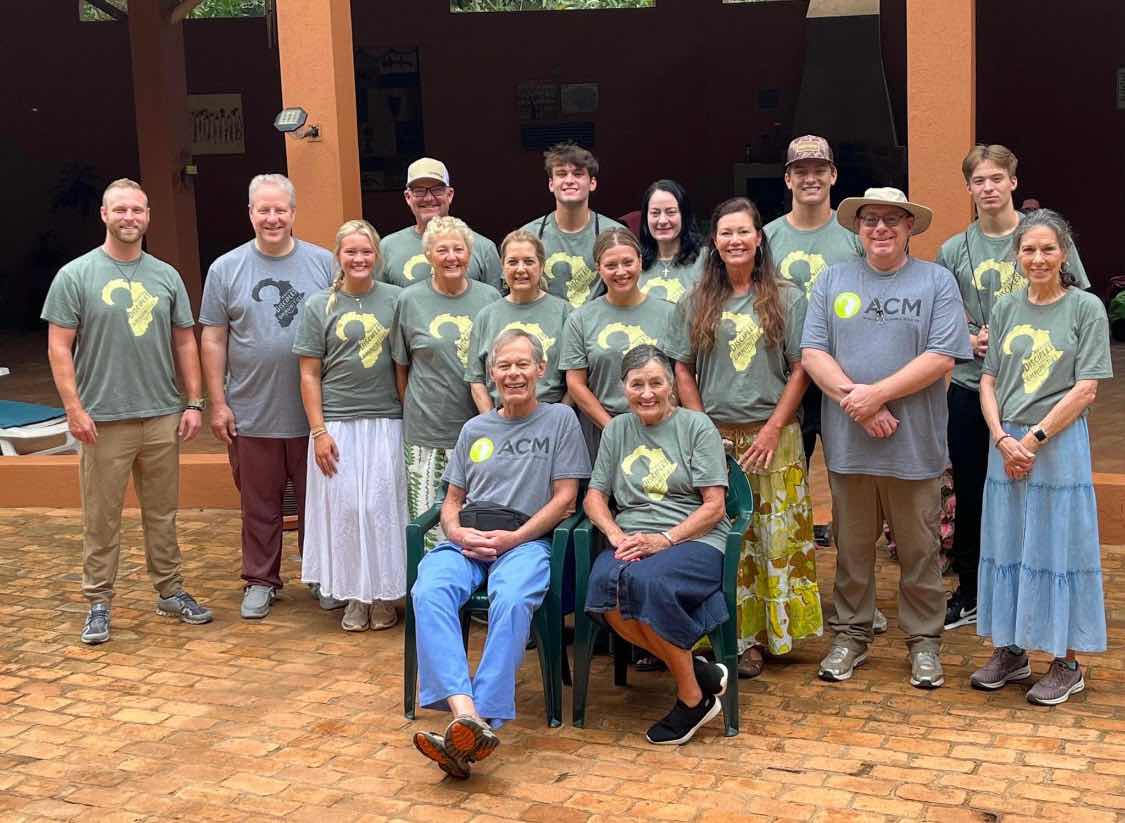
Uganda Mission Trip
Sunday, June 9, 2024
"One Three Nine" by Aubrey Logan
To have a listen, click ONE THREE NINE.
I was excited that Psalm 139 came up in the lectionary. During the early days of the pandemic, I fell in love with the jazz of Aubrey Logan. She does trombone and vocals with a rhythmic fusion of jazz, pop, and rock, and sometimes her music has religious overtones (in addition to generally wholesome themes). I suspect she has a United Methodist background, because she has a number of times quoted things found in our hymnal. This selection is a good example.
I presented Aubrey Logan's "One Three Nine" in worship in June of 2024. I share it here in hopes that it helps you get in touch with the inescapable love of God through the words of Psalm 139.
Notice that she quotes "Oh, How I Love Jesus" at the beginning and the end. She didn't just do that because it's a pretty tune, she did it because it's a theological statement. She wraps the love of our Creator, who searches and knows us intricately, together with Christ in the last verse, in fact.
To have a listen, click ONE THREE NINE.
Monday, May 13, 2024
John 17
Monday, January 22, 2024
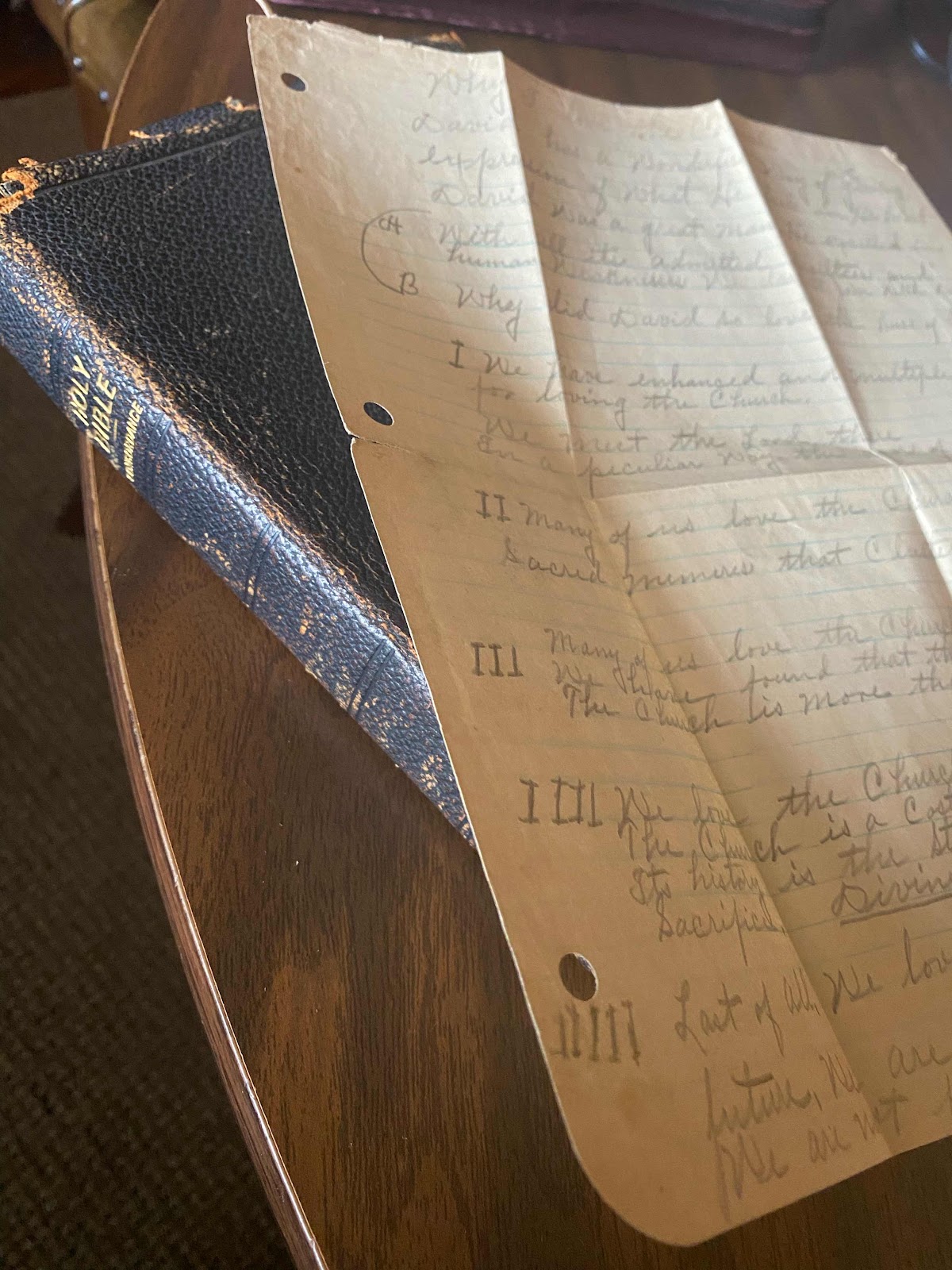
Why Grandpa Hamby loved the Church
Wednesday, July 5, 2023
Presentation on Staying in the UMC
I have been a spokesperson for staying UMC in this season when some have been discerning whether to secede from our denomination or remain in the main body. Each presentation has been tailored to a local situation.
Now that I have finished the last speaking engagement on my calendar, I feel compelled to share my most recent presentation with you here.
I’m passionate about the future of the UMC and believe we have great days ahead, pulling together and focusing on making disciples of Christ after this schism. I stand firmly against the wealth of misinformation that has been spread by separatists, and this presentation includes some of my “Methodist mythbusting.”
If all you’ve heard is a separatist presentation, you have not opened yourself to a complete picture. Factual information from your pastor, conference, and bishop isn’t the “other side” but the common ground from which multiple sides should be considered.
I hope this offers a clear, compelling alternative to the separatist point of view. Some highlights are:
- The distinction between traditional “compatibalists” and “incompatibalists”
- Essential Wesleyan spirituality
- Addressing MYTHS such as the ideas that UMC beliefs are going to dramatically change, extreme examples represent the whole, we are all going to take a “hard left,” and that leaving is a “good business deal.”
- A vision for being a traditional church in a diverse denomination
- Choosing unity over conformity and uniformity
Feel free to share it.
Friday, June 30, 2023
Letter Responding to my Stay UMC Presentation
Friday, July 16, 2021
A Meditation on Sauty Falls
“A Meditation on Sauty Falls”
by Steve West
The water keeps coming.
It keeps coming, coming, coming.
Across the span of history in a way that’s timeless ... from my limited perspective, anyway ... it keeps coming.
Sometimes it’s bigger, louder, and faster. Sometimes it’s smaller, quieter, and slower.
But it keeps coming.
It’s not only the seasons that affect the flow. Year by year, there are changes. They are so subtle you can’t see it. But I trust it.
Sometimes a stone or tree falls in, and the water finds a new way to flow. Sometimes it carves out something entirely new as a result. Sometimes it takes a really long time.
Then sometimes it’s own creative tendency to make crevices of natural flow is reason enough to find new paths. Sometimes, part of the water ventures away from the central flow. That’s okay too. It’s just another part of the beauty.
When people like me come along to have a look, or take a picture, it’s stunningly breathtaking. But the flow is always secretly, subtly changing.
The water keeps coming. It never stops. That’s how it blesses the world.
Why? Because it’s living water.
It’s Living Water.
That’s what it means to me to be part of God’s Church.
This is a picture I took during meditation time after hiking to the falls in Buck’s Pocket State Park.
Friday, April 9, 2021
Invocation for Installation of President Don Killingsworth
Today, I had the privilege of leading a Blessing Service for Don Killingsworth at First United Methodist Church prior to his inauguration. Joining together with three other pastors from the community, we prayed for his leadership, for his faculty and staff, for his students, and for his family.
Wednesday, April 7, 2021
Beth Moore Speaks Out
Monday, April 5, 2021
Every Morning is Easter Morning!
Tuesday, February 9, 2021
Praying the Psalms
Friday, February 5, 2021
A Vision for Those of Us Who Wish to Stay in the UMC
Tuesday, October 6, 2020
A Few Basic Facts for North Alabama Laity
Monday, August 24, 2020
Stay UMC
Dear Methodist friends,
These are difficult times, and there are many more pressing things on our plate.
However, a group of North Alabama Methodists are advocating that the North Alabama Conference "Stay UMC," should there be a vote called for on the Annual Conference level to secede from the United Methodist Church and form a new "traditionalist" denomination. This vote could take place in 2021 or 2022 if the Protocol passes at General Conference in 2021, as many expect. There are some clergy and laity in the North Alabama Conference who are actively working toward the goal of leaving the UMC.
"Stay UMC" released www.stayumc.com today. This was to be unrolled in early March and the pandemic caused a heavy pause. General Conference has now been postponed to August/September of 2021, so it is still something in front of us.
I wholeheartedly support “Stay UMC!” I invite you to explore www.stayumc.com and join the movement.
I hope that discussions around the “Stay UMC” movement will lead to greater transparency so we can be a better Church.
I have nothing against clergy and churches who wish to leave the UMC in the present impasse. They are brothers and sisters in Christ. Some are very traditionalist, others are very progressive, but on both edges there are those that would choose to no longer stay in communion with the traditionalists, centrists, and progressives that believe we are called to be one diverse Church. The denomination is making withdrawal possible now, and churches may keep church properties if they follow the appropriate requirements. I just don't believe those who wish to form a new denomination should attempt to force the entire Annual Conference to go with them.
Please check out www.stayumc.com to understand what the Protocol is, why we wish to "Stay UMC," and what's at stake if we don't.
Sunday, April 5, 2020
Palm Sunday Online!
Participants were invited in advance to place palm or greenery arrangements on their doors and send in pictures, as well as have palms for their kids to wave during children's time in the service. Children had received a delivery from the church on their front porch the day before with special Holy Week toys, books, and activities. During Holy Week, they will be invited to bedtime stories each night on Facebook Live.
Friday, February 14, 2020
Why I'm Not Leaving the UMC
A few weeks ago, hundreds of North Alabama Methodists that consider themselves traditional, orthodox, and conservative met at Clearbranch UMC to talk about splitting from the United Methodist Church. I have had good interactions with the pastors who organized the meeting. They are my colleagues. They are part of the Wesleyan Covenant Association, an organization of 1,500 churches nation-wide and about 60 clergy here in North Alabama planning to launch a new denomination a few months from now, once the General Conference in May allows for their gracious exit.
I respect their convictions. But I won’t be joining them. Here’s why.
1. I made a promise. My Dad is a retired pastor, and he and I agree neither of us will leave the UMC (until recently, it was beyond my imagination that any of us would consider it). It would dishonor our family history, but there's something even more important at stake. I feel it would disregard the vows I made at ordination. I promised I would be faithful to the UMC and uphold its discipline. I have done so even if others haven't, and I am only responsible for my own vows. I follow the Discipline of the UMC even when I get heat for it, gently insisting that all people may participate fully in the ministries, sacraments, and programs of the church (yes, that’s in there). I would not perform a same sex marriage, but I’m passionate about inclusiveness in the church. For me, it’s the way of Jesus but it's also about the vows I took. Speaking of vows, I feel leaving the UMC would be hypocritical when for over 30 years, I have welcomed members into God's Church by asking them to take a vow to be loyal to the UMC and support it.
2. This has evolved past social issues to schism. I am a centrist and have varied opinions on issues. The UMC is not perfect, but diversity of thought is one reason I love it. Wesley taught Christianity was essentially about love for God and neighbor, growing through the means of grace, and staying connected even when we "agree to disagree" (yes, he coined that phrase). We have made it through divisive issues such as slavery, voting rights, temperance, civil rights, and ordaining women. It is the most evenly widespread denomination in the United States, so there will always be cultural issues. But this is a moment where I must decide whether to stay at the table and work it out or not, and to me, that’s the very definition of Church. There is no plan on the table that involves telling pastors they have to perform weddings they’re not comfortable with, telling local churches they have to do something inappropriate for their context, or telling conferences that they can’t set standards for ministry. I respect that others may leave the UMC because of their convictions, but I am staying precisely because of mine. Wesley said that separating "from a body of living Christians with whom we were before united is a grievous breach of the law of love" and hence it "is only when our love grows cold that we can consider separation."
3. There is too much to be lost. The UMC is not perfect, but it's my home. In a romanticized view of starting a new Methodist denomination, one can forget there are so many positive things to be lost by leaving. Together we have created UMCOR, the Upper Room, the Walk to Emmaus, the Academy for Spiritual Formation, Africa University, and all sorts of regional treasures like Sumatanga and the Children’s Home. In America, we have started more colleges and universities than any other faith group, and we charter more Scouts than any other denomination. No Church is perfect, but there is much to be lost by leaving. I respect those who can't live with differing practices across the country, but our DNA is connectional, not congregational. Small churches will be the biggest losers if they suddenly have responsibility to recruit their pastor (this is in the proposed Discipline of the new denomination). Promises are being made, of course, but I believe that the DNA of a new denomination that forms over cultural disagreements will end up splitting again over the next one. I honor their decision, and perhaps we will all be able to move forward more freely with bringing people to Christ. But I can't be a part of leaving.
4. I believe in the authority of the Bible. The debate is incorrectly framed as being about Biblical authority when it is really about culture wars. I hold the Bible in high authority under the lordship of Christ. It was inspired by the Holy Spirit, written by human hands, and codified by holy councils. God was in all of it. Wesley didn’t teach fundamentalist ideas such as inerrancy and infallibility. Instead, he taught the importance of interpreting it faithfully through tradition, reason, and experience. He said in our Articles of Religion that the Bible contains everything necessary for salvation, but he didn’t say it spells out everything. How do I interpret the Bible over complex issues like acceptance of LGBTQ Christians? The reason we call it the Word of God is because it reveals Christ, who the Bible calls the Word. So I read the Bible through the lens of Christ, who fulfills the law and confounds the Pharisees. I don’t worship the Bible. I worship Jesus, so to make sense of the Bible, I read it through the person of Christ. He loved every broken person he encountered. The only people he criticized were the Pharisees who had lost sight of love because of religious rules based on their tight interpretation of scripture. The Bible says God is love, and everyone who loves is born of God and knows God, so I believe it.
5. I am traditional and orthodox. The schism is being planned over a set of social issues that are neither discussed in the gospels nor addressed in the ancient creeds. So it is odd for people of only one viewpoint to exclusively claim the terms “traditional” and “orthodox.” There are indeed moral issues addressed in scripture we must grapple with. But our Wesleyan tradition is, once again, to interpret scripture through tradition, reason, and experience. I believe in the virgin birth, the resurrection, the humanity and divinity of Christ, the Trinity, and the things addressed in orthodoxy. I also follow the tradition of Wesley, who loved to use the saying “In essentials unity, in non-essentials liberty, in all things charity.” Jesus didn’t even mention the issues that divide us, but there’s something else that he most definitely did talk about - our unity, for that’s what Jesus prayed for in John 17. I have friends that say they are not leaving the Church; the Church has left them. I get that, but I honestly find it to be an echo of southern secessionism. The UMC agrees on what’s essential, and I’m going to stay at the table and work out what’s secondary.
6. I follow Jesus. I keep coming back to the way Jesus treated the woman at the well. He offered her living water, then after indicating he knew of her past, he took her seriously in discussing the religious issues on her mind. I have noticed what he did NOT say. He gently pointed out that she was committing adultery (that one’s in the ten commandments), but he didn’t say “oh, now I take back what I said about living water.” Christ’s offer was still good, and then they had a fascinating discussion about faith. So I choose to accept people for who they are and invite them to God’s table for relationship with Christ. God handles the rest.
7. I believe in grace. Do our churches rebuke people who are divorced and remarried, not allowing them to serve in ministry? I’m not saying we should hold remarried people in judgment, not at all. I’m saying that if we offer grace in one situation addressed in scripture and not in another, it's clearly not about Biblical authority but about culture wars. I can't be a part of a new movement that insists LGBTQ people can't be Christians. I know too many that are.
8. I believe in the Church. We are the body of Christ, and I don't have all answers about the future, but leaving the table is out of the question. Our divided culture needs a witness to love that transcends our differences, not giving in to the prevalent “us vs. them” and “either/or” mentality. The biggest criticism Jesus got was that he “ate with sinners.” Who am I to decide that I can’t be in communion with someone I don’t agree with? The only people Jesus didn’t tolerate were the religious elites who were intolerant. I’m not going to be one of them.
That’s why I’ll stay UMC. I agree with Pinson UMC pastor Joe DeWitte who said “The UMC continues to discover that our church is big enough (because our God is big enough) to include people who disagree on matters that are not creedal."
Here I stand, I can do no other.
Tuesday, February 5, 2019
Ghana Trip Made the Papers
Friday, December 21, 2018
There's more than one way Christ comes to us
It's something unusual, something unexpected, and something a bit heart-warming. This year, it was a phone call.
Last Saturday, our church held our annual "Christmas and Beyond" party where we hosted most of the 150 children and their families that we help with Christmas. We had done all the shopping in advance, so we shared a Christmas program of songs and games, treated everyone to breakfast, and opened a Christmas thrift shop for their families to enjoy.
When it was all over, I got a phone call from one of my parishioners with a story I'll never forget. During the morning's activities, a grandmother who had brought her three grandchildren to Christmas and Beyond told a story to the volunteers who were fixing her coffee.
She said that the night before, her two nephews, who are ages 21 and 23, were at her house, and they asked her grandchildren what they were going to do on Saturday. The kids said they were going to a "Christmas party" at the Methodist church.
The nephews replied, "Oh, you will have a great time! We went there when we were your age, and they made us pancakes, and we heard the Christmas story, and everyone was so nice to us! You will love it!" One of the nephews said "It is my favorite Christmas memory!"
This brings a little mist to my eyes. As if that is not heart-warming enough, the grandmother continued, "You may not realize it but this party has a lasting impact and this is proof. Twenty years later, my nephews still remember your kindness." That's the best phone call I've gotten in a long time.
I love the Advent season. In my faith tradition, it's a four-Sunday season of expectation of the coming of Christ. The little Christmas surprises ... the serendipitous, heart-warming moments ... have grown to be something I expect.
I try to keep my spiritual antenna's up to see where God is going to show up. That's because there's more than one way Jesus comes.
The first was Christ's coming in the flesh. The second will be his coming again in glory. But there is one "coming" in between, his coming into our hearts.
Here are some words from his sermon: “We know that there are three comings of the Lord. The third lies between the other two. It is invisible, while the other two are visible. In the first coming he was seen on earth, dwelling among humans; he himself testifies that they saw him and hated him. In the final coming all flesh will see the salvation of our God, and they will look on him whom they pierced. The intermediate coming is a hidden one."
He continues, "In the first coming our Lord came in our flesh and in our weakness. In this middle coming he comes in spirit and in power, in the final coming he will be seen in glory and majesty. In case someone should think that what we say about this middle coming is sheer invention, listen to what our Lord himself says; ‘If anyone loves me, he will keep my word, and my Father will love him, and we will come to him’.”
It is this "middle coming" that seems to show up again and again for me during this season, sometimes when I least expect it but I try to always be looking for it. Because it lies between the other two, it is like a road we travel on from Christ's first coming to his last.
As Bernard put it, "In the first, Christ was our redemption; in the last, he will appear as our life. In this middle coming, he is our rest and consolation.”