Showing posts with label Methodist split. Show all posts

Tuesday, March 25, 2025

Celebrating “Stay UMC”

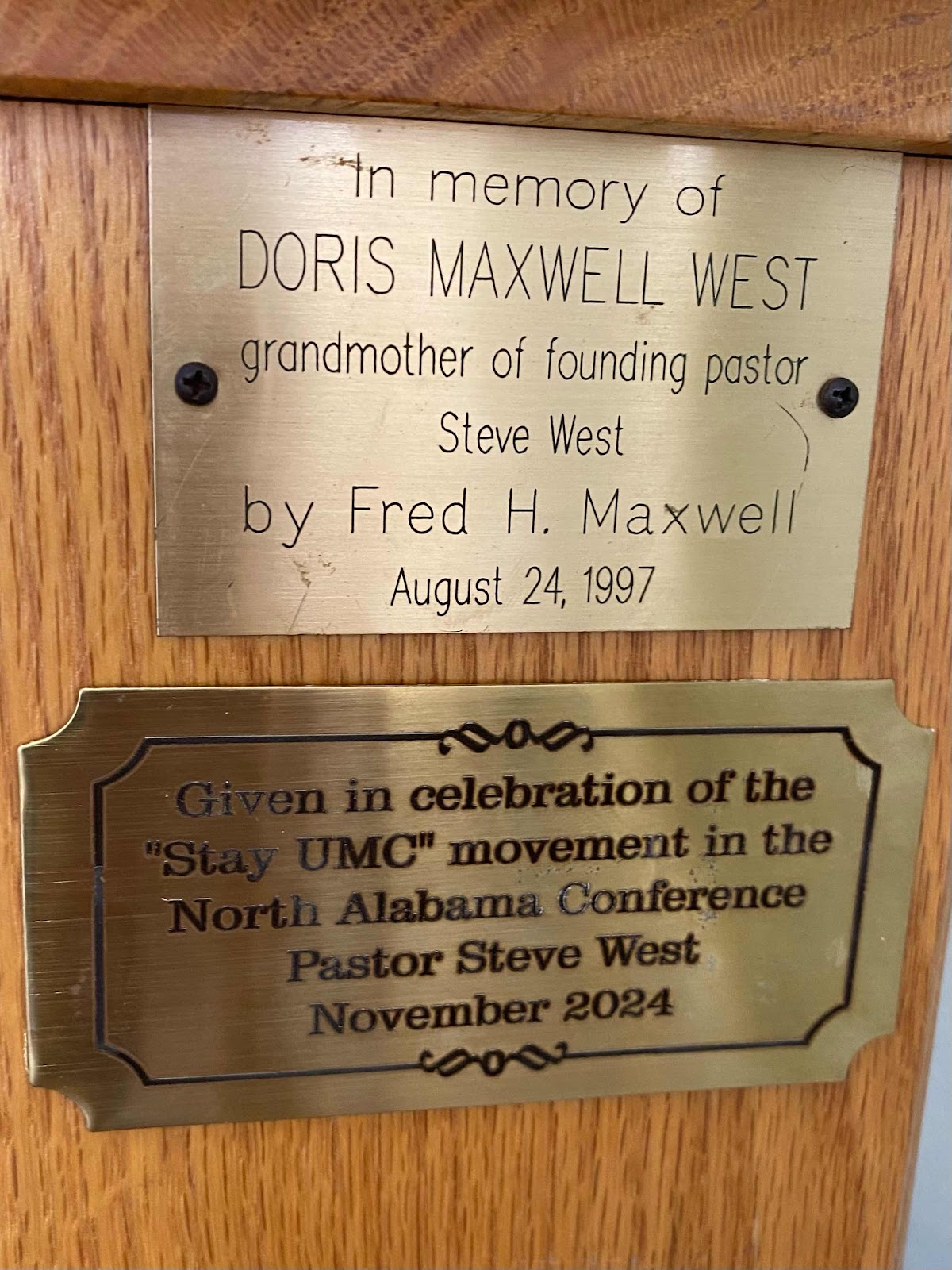
I’m celebrating the new home of a very special prayer kneeler in a new UMC! 

It was originally placed in memory of my grandmother. It was for the UMC I served as founding pastor many years ago. 

Later in history, the church renovated and no longer needed it. Eventually, they gave it back to me. I’m so incredibly grateful.

In celebration of the Stay UMC movement, I have “regifted” it to another United Methodist Church. May it bring a prayerful spirit to the people of the newly formed All Saints UMC in Trussville, Alabama! May it strengthen them and give them good courage. We are praying for you!


Tuesday, December 17, 2024

The GMC Incites Deaths in Nigeria

Really? I guess this constitutes the first set of “GMC incited” deaths. Three United Methodists were killed in Nigeria as a result of GMC violence.

“We further urge GMC members, at all levels, to put an immediate end to the violence and refrain from disseminating misinformation that fuels fear and disdain that can lead to violence. Likewise, we call our United Methodist members to be guided by integrity and respectful while working towards maintaining peace.”

“The Global Methodist Church leaders are concerned about their future as The United Methodist Church in Nigeria continues to make steady progress. He noted that the majority of United Methodist laity and clergy stayed with the denomination.”

To read about it, see this ARTICLE.

I have always, I remain, and I will always STAY UMC.

Tuesday, August 27, 2024

My Twelve Convictions as the UMC Moves Forward


As I pray and continue to find healing and perspective after last year's season of church disaffiliations from the main body of the UMC, on a recent retreat I wrote down these twelve convictions. What would yours be?

My Twelve Convictions

1. Ministry is messy because relationships are messy. It’s by grace that we are saved! I love church because it’s the gift God gave us to bring people to Christ. So I embrace the messiness with joy. I choose the Jesus way and work things out in love.

2. As I said in my book, “the arc of Christian history bends toward inclusion.” Christianity, since the early church, has reformed itself over and over to come back to this gospel value. Here we are again. Reform is painful but it’s necessary to meet the times.

3. My personal views were changed by decades of ministry with LGBTQ+ Christians, in and beyond my local church. The idea that you can’t be gay and be Christian is bogus. I know too many that are. Their witness formed me over time. I have experienced the Council of Jerusalem in Acts 15 in slow motion.

4. I don’t worship Wesley. But I find the Wesleyan way an unparalleled, balanced, and passionate expression of biblical Christianity. Wesley’s sermon “The Scripture Way of Salvation” and our core doctrines in the Discipline spell it out. I just love being a mainline United Methodist. I believe the holiness tradition the separatists claim is a derivative of Wesleyan spirituality. I don’t believe we can arrive at a sinless life. I choose to be overwhelmed by grace!

5. It’s clear from Wesley’s writings, especially “On Schism” and “The Catholic Spirit,” that he would be mortified by how the separatist leadership has functioned over the last ten years. The secessionists caused the schism, not the people they demonized.

6. The initial concerns were valid … how do we move forward in light of dramatic changes in our culture? But the WCA formed in 2016 to openly plan schism. They overturned the One Church Plan presented by the Commission on a Way Forward in 2019, though they knew they would probably leave anyway. They also knew full and well that the Traditional Plan was not sustainable, so I have concluded that it was never intended for unity. It was to say “either they’re leaving, or we’re leaving.” I saw this from the beginning and protested. It turns out they followed through with their end game.

7. The separatists did not leave the UMC for theological or biblical reasons. They left for sociological reasons, rooted in American culture wars and ideological politics. They simply made justification for it using the Bible and theology. This exposed the underbelly of American religious history, as such movements have done in the past. I love our religious freedom because it leads more people to Christ, but this experience has shown me this is the biggest pitfall.

8. Diversity, not division, is a sign of the Holy Spirit. Unity has never been the same thing as uniformity. Wesley coined the phrase “agree to disagree” because he strove for perfection in love. Love is what matters. Love wins.

9. The gospels never even mention the hot button topics that separatists left over. But the gospels definitely teach about unity. Jesus prays for it for a whole chapter in John, noting that our unity comes from abiding in him (not agreeing on everything).

10. Yet here we are, and those who left us are our siblings in Christ who we must now love, just as we love people of other denominations. This will involve forgiveness and healing. I am on a journey of opening my heart.

11. The communion table is the gift Christ gave us to bring unity in our diversity. It’s not just about me and Jesus. It’s about the kingdom of God. We need to come back to the table in order to move forward. This message is the gift I brought to the larger discussion, for such a time as this.

12. The UMC can now robustly stand for the positive biblical value of unity in diversity, over against the divisiveness of our culture. We are unhindered by the divisions of the past and can truly embrace the vision of open minds, open hearts, and open doors. We can grow by bringing all kinds of people into vibrant relationship with Christ and a life of being immersed in grace. I’m excited about our future.

Monday, July 29, 2024

Holiness or Methodist?

I recently listened with an open heart to the sermon of a pastor who is one of the separatists who recently left the UMC. He articulated (very well) how their movement falls solidly into the tradition of “holiness” movements. From a historical and theological standpoint, I couldn’t agree more. Even Asbury seminary, which fuels the movement, has always been a Wesleyan holiness seminary and has never been United Methodist.

The only difference this pastor and I have is that he considers this holiness movement as the original Methodism, when I believe it is actually a derivative of early Methodism which appeared about a hundred years later.

Wikipedia describes holiness movements pretty well. See below. I agree they emerged out of the Wesleyan concept of Christian perfection. For the UMC, though, Wesley’s call to perfection has always been holiness in love, not some sort of concept of sinlessness. Striving to be free of sin is, in my theology, a vain effort. I choose to be overwhelmed and formed by the grace of God.

For more on the distinction, this Wikipedia article describes it well. You can read it HERE:

https://en.m.wikipedia.org/wiki/Holiness_movement?fbclid=IwZXh0bgNhZW0CMTEAAR0GsSA4lTjHeePVHUgOWgpHUz6KAsBYha6il5Z67B4AM-pa_vr2P-gLSD8_aem_DFuhXq1-eB6w7wqPcOMxgQ

I actually detected the holiness strain when I read through the GMC provisional book of doctrines and disciplines (to knowledgeably refute what they were doing). Specifically, it follows some holiness teacher at Asbury seminary that teaches that there are four (not three) “scripture ways of salvation” … prevenient, justifying, sanctifying, and glorifying grace. That last one is purely an additive, Wesley never said that. Also, I detected in there a call to “entire sanctification”, I can’t remember the reference exactly but it was there.

Yes, the language of glorifying grace does come out of Asbury seminary, as far as I can tell, and is not taught in UMC seminaries or included in the doctrinal section of our Book of Discipline because Wesley did not use the language himself (the matter of Eastern theosis which Wesley found attractive is considered in UMC theology a feature of sanctifying grace, as in the Eastern thought he read and adopted like that of Macarius the Egyptian). I interpret “Love Divine, All Loves Excelling” in terms of sanctifying grace. I know this might be kind of “deep in the theological weeds” for some. All that’s to say when I say holiness theology is derived from Wesleyan theology and came later, that’s not a bad thing.

I love 2 Cor 3:18, which speaks of the veil on the face of Moses when in the tabernacle … “And we all, who with unveiled faces contemplate the Lord’s glory, are being transformed into his image with ever-increasing glory, which comes from the Lord, who is the Spirit.” This is Eastern theosis indeed, which Wesley embraced. We are always being transformed (it is never past tense).

I believe the reason Wesley used the language of the doctrine of sanctification, as did the Eastern fathers, and did not add a separate category of glorification, is because for him sanctification is a continual process and experienced as a gradient, not an instantaneous experience. He did believe entire sanctification was possible, but very unlikely … and he openly said he did not know anyone who had attained it. The belief that there is a “second blessing,” a second regeneration experience that makes you free from sin, was not really Wesley’s theology … though you can certainly find strands of holiness in Wesley that could lend itself to that (he was not a systematic theologian).

If the word additive seems too strong, perhaps derivative is a better word. The doctrine of glorification is a holiness derivative of Wesley’s theology. Not only does he never say it, in my studies I don’t think he believed it, at least not in the sense of arriving in that state due to a second regeneration experience. The Christian perfection he longed for was perfection in love, the love of God and neighbor. We strive but never arrive. That love was his definition of holiness.

The GMC has embraced the doctrine of glorification that is from holiness tradition, or arguably from reformed tradition outside of Wesley, as stated in their online material. The pastor I heard is correct. One can argue that it’s derived from Wesley’s theology, sure. But I maintain that it’s not language actually from Wesley’s writings, and it’s not part of UMC doctrine or taught in any UMC seminary. Our language is here:

https://www.umc.org/en/content/distinctive-wesleyan-emphases

I want everybody to know as we wade through these theological weeds that I do not think the separatists split off BECAUSE they believe in holiness theology.

But I do believe it makes sense that they would more fully embrace holiness theology, as movements in the past which have split off from the main body have done. This is more sociological than theological. While the symptomatic issue was culture wars over the latest thing, as it always has been in the past (slavery, temperance, evolution, racial segregation, etc.), holiness theology tends to be a more convenient fit of separatist views.

All that is to say the holiness tradition is a beautiful theological tradition. There is nothing wrong with it and many United Methodists believe some aspects of it, though it is a derivative of Wesley’s original language.

Wednesday, June 12, 2024

Making My Book Available for Discount


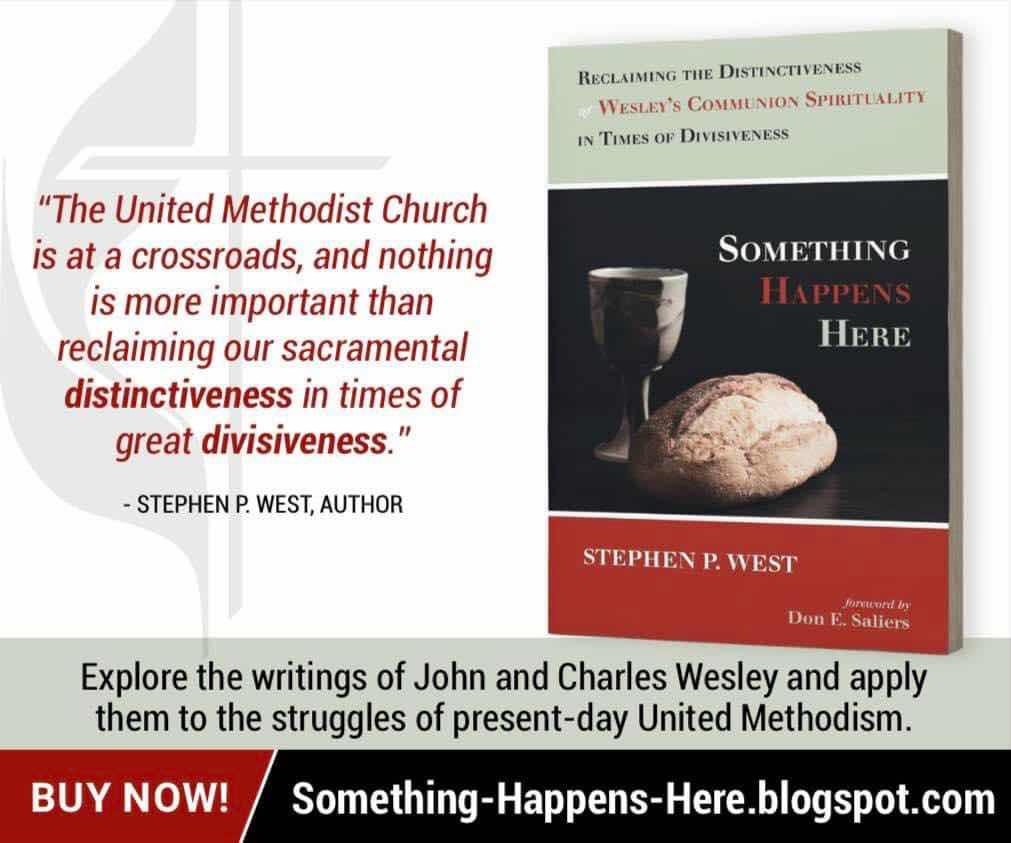
To celebrate a historic General Conference and uplifting Annual Conference, I’ve made my book available for a discount. Amazon and Wipf & Stock have it for $21. I’ll send you a copy for only $15 (with free shipping).


Just EMAIL ME or PRIVATE MESSAGE ME on Facebook with your address! I’ll send it with an invoice and you can pay me later.


If you really want to know why I was active in creating the “Stay UMC” movement, this book is about why.


Adam Ployd, professor and theologian at Wesley House in Cambridge, said, “This book is not so much a work of pure scholarship—though the author has clearly done his homework on the topic of Wesley and communion—as it is an exhortative reflection on the ways in which a robust Wesleyan vision of communion should shape the future of United Methodism. West sees a central problem at the heart of the crisis facing The United Methodist Church: it is being divided by political culture wars that threaten the integrity of the Body of Christ and the radical community it is called to be. The sacrament of Holy Communion, he believes, holds the theological and practical key to renewing the Body and cultivating community in a way that can allow the church to move forward in pious, charitable unity …


“Although West is writing for a popular audience— educated laity and clergy alike—this is an erudite book. West incorporates historical voices, from the earliest generations of Christians to the English Nonjurors and, of course, the Wesleys themselves, in order to educate his reader in some fairly nuanced theological ideas. He does so nimbly, demonstrating both his knowledge of the subject matter and his ability to communicate that knowledge with unusual clarity. Indeed, this is a book to be recommended to all United Methodists struggling with the current crisis who desire a rich, reliable theological resource for thinking about things in a way that transcends the surface-level issues.”


See the link Something Happens Here for more information.

Tuesday, June 11, 2024

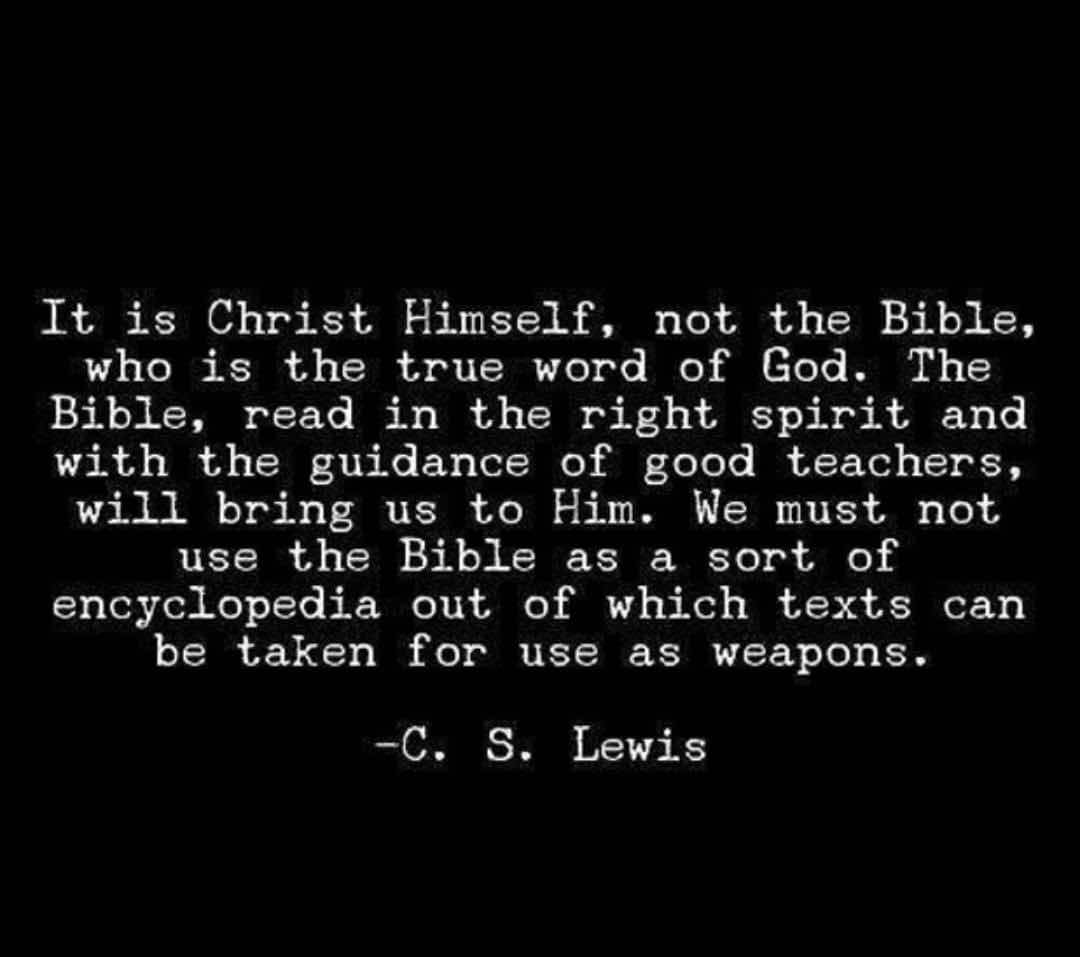
The Word of God


I believe this wholeheartedly. The Bible calls Jesus Christ the Word of God. “In the beginning was the Word, and the Word was with God, and the Word was God.”

There is a custom of referring to the Bible as the Word, but that’s not because it is the “words of God,” chiseled in stone and handed to us. It’s because scripture reveals to us the true Word, which is Christ. We don’t read it “flat” as if it’s all the same. No, it all points to Christ and we interpret it through Christ, the “exact imprint of God’s very being.”

I have been deeply disappointed in how the Bible has been cherry-picked with little context for justification of political opinions and separatism. God gave it to us as a “means of grace.”

Thank you, C.S. Lewis, for reminding me this is not new. May we come back to Christ through our adventures in the Bible. May the Holy Spirit lead us in our theological task of interpreting it through tradition, reason, and experience.

Thursday, June 6, 2024

Why Nigerian United Methodists are Staying UMC

Here’s a statement from the Nigerian United Methodist Church on why they are STAYING UMC!


“Our church has obeyed the prayer of Jesus in John 17:6-19 to be one. We have chosen love over hatred, peace over rancor, and unity over division.”


See the full statement outlining their support for regionalization and moving forward in unity here:


https://peopleneedjesus.net/wp-content/uploads/2024/05/umc-nigeria-press-statement-may-2024.pdf?fbclid=IwZXh0bgNhZW0CMTEAAR2JqjB5PXw_g3YC9KVohGJWNK-gY2AsWHMMkUmzGpH67O9y7LhpX2IX0-o_aem_AarHL1TKDqzrcFPXLvPQSLazTqPHEQQ1WSxPkKAiDTwJ36mCVVoewO8TwlKn_7RO5n-VvEweJZuVyqa4Xg6F_G79


Saturday, May 18, 2024

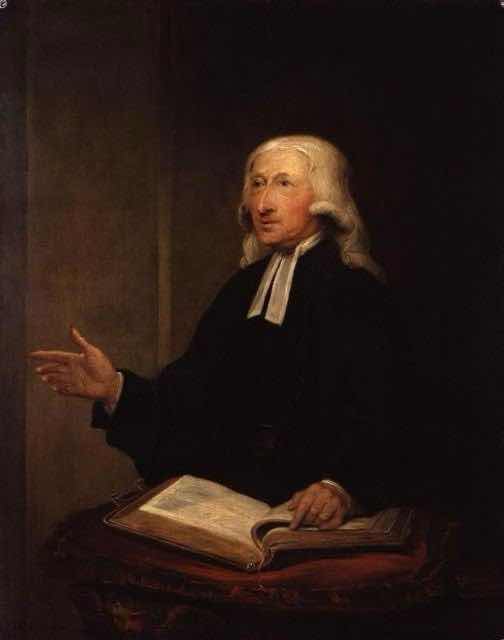
John Wesley Addresses the Disaffiliators

My friend Dean McIntyre shared a quote from John Wesley that is very applicable for today:

"I dislike your speaking of yourselves as though you were the only [ones] who know and taught the Gospel; ...But what I most dislike is your littleness of love...your want [lack] of union...your want of meekness, gentleness, long suffering; your impatience of contradiction; your counting every [person] your enemy that reproves or admonishes you in love; your bigotry and narrowness of spirit, loving in a manner only those that love you...your censoriousness...  of all who do not agree with you; in a word, your divisive spirit.”

John Wesley 
Letter to the perfectionists in London
November 2, 1762


Monday, May 13, 2024

John 17

The lectionary gospel for this past Sunday was from John 17. In my sermon, I said something I've often said in the past couple of years.

“Jesus never even mentions some of things people get so uptight about that they decide to split off from their own denomination. But he most definitely did talk about unity. That’s what he prayed for. We find our life together not by agreeing on everything, especially things that are secondary to the gospel and creeds and confessions of faith … but by abiding in HIM."

Tuesday, May 7, 2024

General Conference Reflections


I sat in as an alternate delegate and voted all morning on the last day on General Conference! It was a joy to participate more actively.

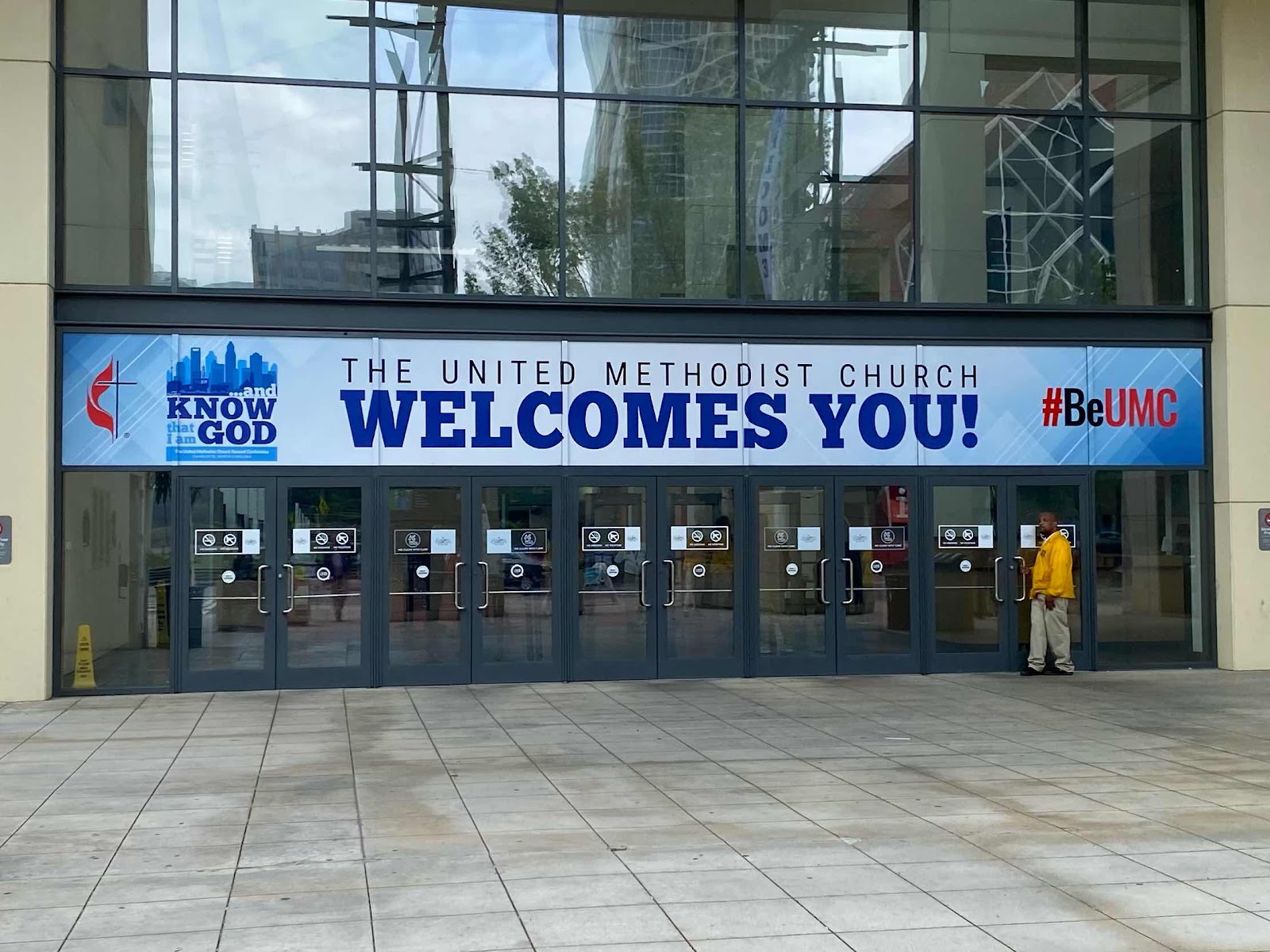
That afternoon, I was driving home from General Conference and reflecting. Just when I thought I might pull over because of a rainstorm to post a few pictures of my last day, I realized I was in Banks County, GA. This reminded me how much I’m UNITED Methodist, with every fiber of my being.

Why? My ancestors started a Methodist society RIGHT HERE in Banks County, GA where they are buried at Mt. Pleasant UMC. Their son (my Dad’s 3rd great grandfather) was ordained by Francis Asbury in 1800. Rev. Levi Garrison was a circuit rider for 7 years until he “located” and pastored local churches in nearby Anderson, SC.

And now here I am in Banks County, posting as the storm clears about how proud I am that the UMC has made it through the storm!

I’ve just left a historic General Conference, where it felt like Annual Conference felt last year. Yes of course there were healthy and normal debates, but all the rancor was gone. There was a sense of companionship, unity, healing, and connectedness.

Here are five huge takeaways for the UMC as we move forward: 

1) “Regionalization” legislation passed with flying colors and will be sent to annual conferences for ratification (it’s a constitutional change). This will give United Methodists in different parts of the world (Africa, the Phillipines, Europe, and the U. S.) a great deal of autonomy in sorting out the social issues of their region, all under one General Discipline with the core beliefs that bind us together. 

2) A fresh new set of social principles were passed which replace the archaic ones that have been amended and strung together countless times. Having a robust set of non-binding social principles (they aren’t church law) has been our tradition for over 100 years, since the church tackled issues such as temperance and child labor and made a big difference. One delegate, who happens to be a Supreme Court Justice in Zimbabwe, practiced true spiritual conferencing to find language to define marriage in a way that Africans, Americans, and everyone else in the room could support in unity. The idea that Africans and the US would never find a way to agree and move forward was a WCA/Good News/IRD “separatist narrative” that we just proved to be untrue. When you were committed to unity, you find a way.

3) The controversial and harmful language in the Discipline about human sexuality has been removed, including the punitive language and schismatic disaffiliation legislation inserted in 2019. We don’t have to agree to be together in unity. So we speak of what we agree on across the diverse world and give each other contextual space to go about the business of the gospel!

4) The denomination practiced good financial stewardship after Covid and the season of disafiliations and reduced budget dramatically. Included in this plan is that no new bishops will be elected this year … anywhere in the five US Jurisdictions … and a number will retire. There will be reassignments and transfers and conferences will creatively share bishops. At the same time, we will add 2 new bishops in Africa (we were originally planning on 5). Our denomination is perfectly sustainable moving forward!

5) As per the original "one church plan" that almost passed in 2019, the punitive bans were lifted, but there were also positive built-in protections for churches and pastors to be as traditional as they want to be. It’s sort of a “federated approach.” It’s always been the best way forward. We are a people of open minds, open hearts, and open doors!

So I am happy to “be UMC” in a new season! Thanks be to God.

Accurate information can be found in our bishop’s letter to the North Alabama Conference. You can find it here:

https://www.umcna.org/postdetail/18354109

More accurate information will be coming out from our annual conference soon. Look for that and talk to your pastor! Naturally, you can’t trust everything you’ll read ot hear, especially when it originates from sources with a separatist or proselytizing agenda.


Tuesday, April 9, 2024

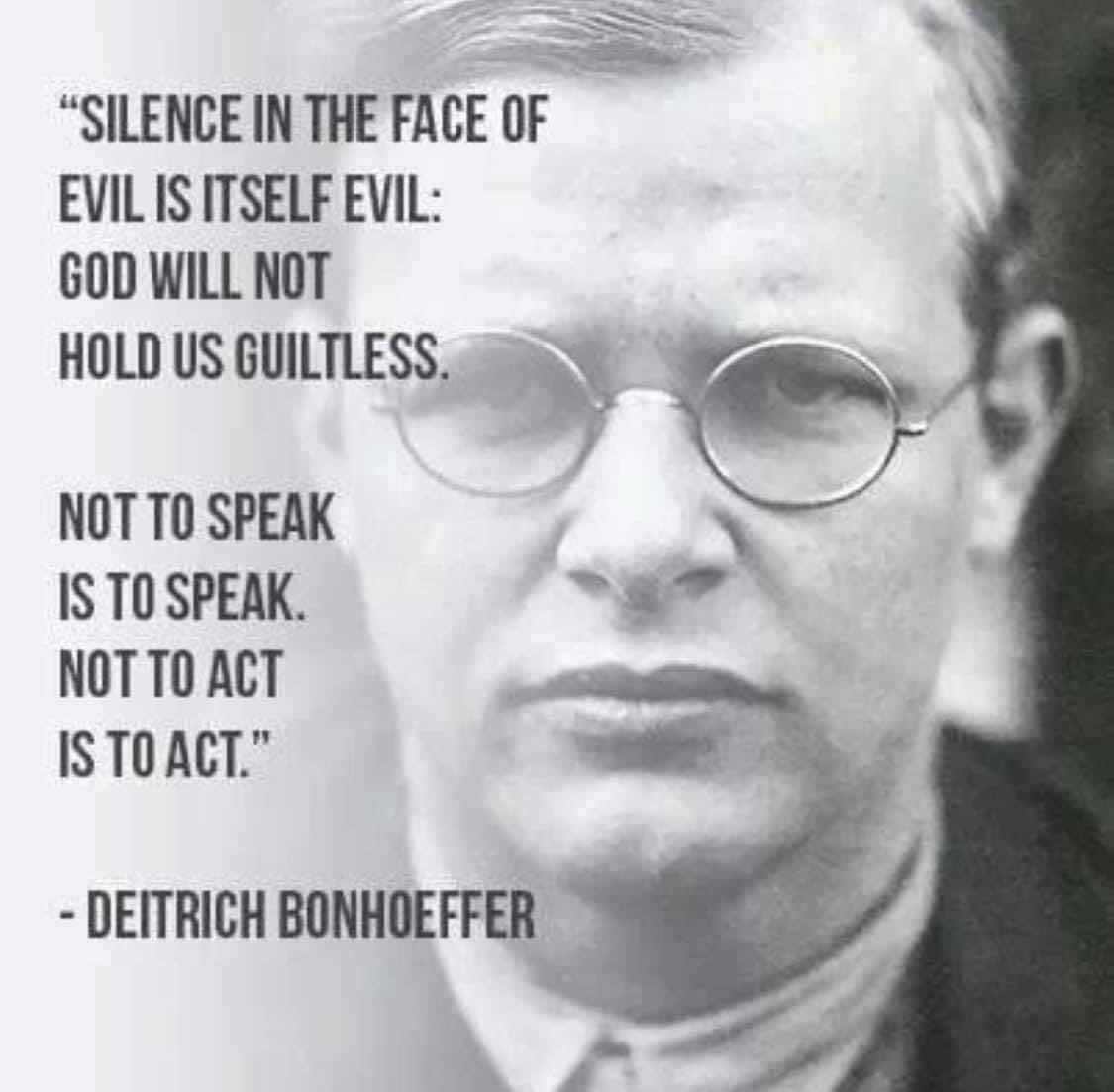
Dietrich Bonhoeffer on real love and community


I honor the life of Dietrich Bonhoeffer, who gave his life today (April 9) living the way of Christ in the face of evil.

Two of my favorite quotes are from “Life Together,” and very profound in these times of divisiveness, when those who have led the charge in leaving the UMC were, in my opinion, more interested in their vision of what community should be like than in actually being in genuine community, and more interested in what they thought love ought to be like than in giving themselves to Christ’s love. Lord, have mercy. It breaks my heart.

“Every human wish and dream that is injected into the Christian community is a hindrance to genuine community and must be banished if genuine community is to survive. He who loves his dream of a community more than the Christian community itself becomes a destroyer of the latter, even though his personal intentions may be ever so honest and earnest and sacrificial.”

“What love is, only Christ tells in his Word. Contrary to all my own opinions and convictions, Jesus Christ will tell me what love toward the brethren really is. Therefore, spiritual love is bound solely to the Word of Jesus Christ.”

I still have the book of devotional excerpts my daughter Deborah gave me years ago, and I open it from time to time. It is dear because she gave it to me.

Unlike Shane Claiborne, I’m unwilling to say  his attempt on Hitler’s life was a mistake. Ethics are rather complex when it comes to extreme evil.

Monday, March 11, 2024

"Where's the Fire?" Homily Shared at the Academy for Spiritual Formation


This is my homily that was shared at a recent Academy for Spiritual Formation at the Warren Willis camp, a United Methodist retreat center in central Florida. Reflecting on Macarius of Egypt as well as the story of my own grandfather, it's about discovering the fire within us, fueled by the fire of the Holy Spirit.

First Reading: 2 Corinthians 3:12-18 (“And all of us, with unveiled faces, seeing the glory of the Lord as though reflected in a mirror, are being transformed into the same image from one degree of glory to another.”)

Gospel Reading: Mark 9:2-8 (the transfiguration)

Sometimes I identify with Peter, not so much when he is doing well but when he is doing poorly. He starts his little speech with “It is good for us to be here,” which is what I catch myself saying when I have no idea how to start. It does say in Mark, “he did not know what to say, for they were terrified.”

So instead, let me start by telling you a story about my mother. She was an amazing person of faith. She was the daughter, sister, niece, wife, mother, and mother-in-law of Methodist pastors (the last one is because I married one). But SHE was the spiritual leader of our family.

I was one of four boys, and one of my early memories is of how she took my brothers to school,  then she sat in a particular rocking chair in the kitchen with her morning coffee for about 45 minutes. She called it her “quiet time.” We were not to bother her during her quiet time! I vividly remember sitting on the couch, listening to her coffee cup click and click on the saucer, wondering when she was going to be finished.

I didn’t know it yet, but she was instilling a longing for God in me.

She was also the kind of person who planned for anything, and that’s where my story comes in. She had a funny habit; when staying at a hotel, the first thing she would do was make sure she knew where fire escape was. Know the type?

One time she and Dad went overseas, and they checked into a hotel. She couldn’t figure out where the fire escape was (there were unfamiliar markings in another language), so she started checking doors. She walked in on a fellow who was in a small restroom. “Oh, I’m sorry, I was just looking for the fire escape.” She quickly closed the door and kept looking.

A minute later, here came that fellow running down the hall, hurriedly pulling his pants up. He was yelling, “Where’s the fire? Where’s the fire?!”

Over the last few years, I’ve been asking myself that same question. Where’s the fire?

After a long Covid shutdown followed by an anti-science blowback, I was left asking, “where’s the fire?” After an uptick of racial tensions followed by extremist insurrection against our capital, and then after a rancor-filled season of division in my denomination, so many things have left me asking “Where’s the fire?”

I didn’t have to ask “where’s the dumpster fire?” We’ve seen plenty of those.

Where’s the fire that burns in the heart, the fire that changes the world?

I had no idea Dwight would teach us about Teilhard de Chardin saying, “Someday … we shall harness for God the energies of love, and then, for a second time in the history of the world, [humanity] will have discovered fire.”

THERE’S the fire. THAT’S the fire my soul longs for.

The word for the day is ENCOUNTERING. I want to introduce you to my friend here. These are icons of Macarius the Egyptian. These particular versions of the Macarius icon look less like Lew than the one I brought here a few years ago … these have more hair! But I chose these particular versions because of a common motif in Macarius icons … his HANDS are held up in the GLOW of God who is all light, all flame, and who illumines the soul.

Macarius was a 4th century monk, one of John Wesley’s favorite spiritual ancestors. We know this because Macarius’ book of fifty sermons were required reading for Wesley’s class leaders, and Wesley himself quoted him in his sermon “The Way of Salvation” when he describes “sanctifying grace.”

I read the sermons of Macarius. It changed my life.

This is partly because I discovered Macarius was the original source of Wesley’s theology of how grace comingles with our free will, and of what BOTH of them called Christian perfection (not flawlessness, but a journey of being perfected by the holiness of love). 

Reading his sermons also changed my life because while Wesley used very exacting language (like “prevenient, justifying, and sanctifying grace”), Macarius used the most wonderful metaphorical language I ever heard, like our SOUL is a ship, or a moving throne, or a chariot with Christ as the charioteer, or a castle (yes, Teresa of Avila picked this up from Macarius and ran with it 12 centuries later).

Do you know what Macarius said about spiritual formation? We are all gathered around a FIRE. I invite you to hold your HANDS UP like Macarius, and hear his words:

“As many lights and burning lamps are lighted from fire, but the lamps and lights are lighted and shine from one nature, so also  Christians are enkindled and shine from one nature, the divine fire, the Son of God, and they have their lamps burning in their hearts.”

Do you know what else he said about that lamp burning in each of our hearts, lit from the one fire? He said our SOUL is like a BRONZE vessel you put burning fuel under so the INSIDES are made warm. He adds, “So also grace, the heavenly fire, is also within you.”

The FIRE of the Holy Spirit burning under us becomes a heavenly fire that burns WITHIN us.

So … “where’s the fire?”

The word of the day is “encountering” and part of us LONGS for that kind of encounter with God - an encounter like Peter, James, and John on the mountain, or like Moses whose face was glowing from a personal encounter with GLOW of the great fire.

Let me tell you a personal story about finding that fire.

After a grueling few years of defending my annual conference from harm (some of you know my journey with the “Stay UMC” movement), one day I got out my Grandpa’s Bible.

I didn’t bring it today (it’s too fragile and priceless) but I keep in on my shelf. If I had time, I would tell you a story of Grandpa Hamby (he led a revival in the 1920’s, and brought pistols to the pulpit to defend the church against bootleggers who were trying to shut it down). It’s a colorful story … after all, I am from Alabama.

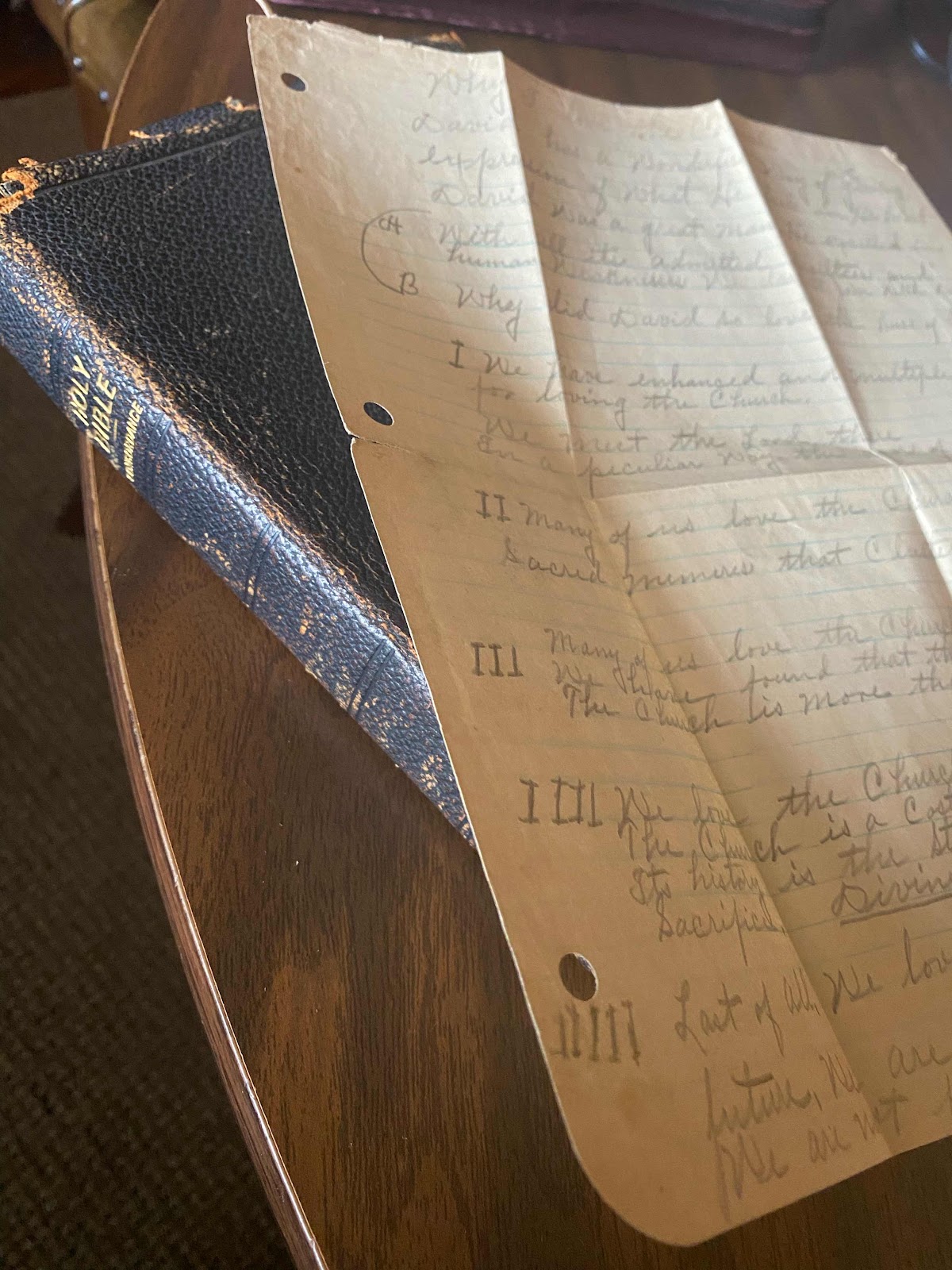
So I have his preaching Bible. (My uncle gave it to me when I was ordained). One day recently I got it out, and something dawned on me after all the pain of the last few years. I realized it was probably the SAME Bible that sat on that pulpit between those two pistols. But I had never gone through his sermon notes that were folded within its pages.

Well, a few weeks ago, I did. I found a particular one … it was entitled “Why I Love the Church.” Grandpa wrote:

“With all its admitted frailties and human weaknesses, we dare to join with David. Why did David so love the house of God? …

He shared a few thoughts, followed by this: “We love the Church because of what it cost.  The Church is a costly institution. Its history is a story of divine and human sacrifice. Divine. Human. (He underlined these two words)

“Last of all, we love the Church because of its future. We are not manning a sinking ship. We are not fighting a losing battle.”

I then had one of those mystical experiences when I wondered if that was the very sermon he was preaching that day with two pistols on his pulpit to protect his church from getting shut down by those bootleggers. Was it his sermon on “why I love the church?” 

What do you know. I would never take guns to church, but maybe it’s part of my spiritual DNA to “stick to my guns.”

What you also need to know is my Granny’s poem is in front of that Bible, written to my uncle on the eve of HIS ordination. I brought a picture so you can see. It’s entitled “Don’t Forget the Glow.”

This poem has always been dear to me, but now it’s taking on new life:


“I stood beside him proudly,

So much he’d learned to know.

And yet I dared to whisper,

‘Son, don’t forget the glow’.”


“The glow that feeds the hunger

In restless human breasts,

The glow that gives the answer

To life’s long, ceaseless quests.


“The glow that’s so rewarding,

When through the preach’d word

They breathe a prayer of ‘thanks, Sir’

For the wondrous things they’ve heard.


“Always put it in your message. 

Hungry hearts, of God’s lost sheep,

Reaching out for strength and courage,

Need soul-food to climb the steep.


“The glow by which your father

Led countless souls to see

The ‘glow-ry’ of the gospel

As it’s surely meant to be.


“A diamond studded highway

Whose end is sure reward.

So keep it bright and shining,

The glory of his Word.”


Are you asking yourself “where’s the fire?” Are you longing for an ENCOUNTER with God?

There’s already a FIRE that burns beneath your “bronze vessel.” It’s the fire of God’s love. Our part is to fuel it with spiritual practices.

We didn’t START the fire. But if we keep the fuel coming, the holy fire grows hot. After simmering a while, we may find that the heat starts coming from within, too. 

And when it does, well, don’t forget the glow.

In the name of the Father, the Son, and the Holy Spirit.

Monday, January 22, 2024

Why Grandpa Hamby loved the Church


Here’s an inspiring word from the preaching Bible that belonged to my Grandpa C. P. Hamby. This is probably the very Bible he laid on the pulpit with two pistols nearby to ward off the bootleggers who were trying to shut down the Church in the 1920’s.

I wonder if this is the very sermon he was preaching. The sermon is entitled “Why I Love the Church.” Grandpa wrote:

“With all its admitted frailties and human weaknesses, we dare to join with David. Why did David so love the house of God? …

“We love the Church because of what it cost.  The Church is a costly institution. Its history is a story of divine and human sacrifice. Divine. Human.

“Last of all, we love the Church because of its future. We are not manning a sinking ship. We are not fighting a losing battle.”

#StayUMC
#BeUMC


Saturday, January 6, 2024

“This Gospel” of Radical Inclusion


Happy day of Epiphany!

Here’s a snapshot of Sandy when we were enjoying the Christmas lights at Calloway Gardens.

May the light shine and unfold for you the mystery of the ages, hidden in Christ and now revealed. Paul describes “this gospel” as one of radical inclusion (not just personal salvation) in Ephesians 3:5-10:

“In former generations this mystery was not made known to humankind, as it has now been revealed to his holy apostles and prophets by the Spirit: that is, the Gentiles have become fellow-heirs, members of the same body, and sharers in the promise in Christ Jesus through the gospel. Of this gospel I have become a servant according to the gift of God’s grace that was given to me by the working of his power. Although I am the very least of all the saints, this grace was given to me to bring to the Gentiles the news of the boundless riches of Christ, and to make everyone see what is the plan of the mystery hidden for ages in God who created all things; so that through the church the wisdom of God in its rich variety might now be made known to the rulers and authorities in the heavenly places.”

Wednesday, December 20, 2023

My Thoughts on the Regionalization Plan

I was on an online forum where someone asked if the plans for regionalization “only affects Africa.” I thought I should share my response here.

“No, regionalization would affect everything. Right now, there is some level of Contextualization allowed for central conferences outside the US, but NONE is allowed within the US. Regionalization would allow all areas of the world to have Contextualization over agreed-upon general areas. This would be a peaceful and unifying resolution to our current crisis, because the African church, for example, would not be pulled into voting on matters that only affect the US. It makes sense. Then the US delegates could find a way forward with something like the ‘one church plan.’

“Frankly, in my opinion the WCA has used manipulation tactics to use African delegates for their votes in a way that resembles colonialism, and it’s now become evident by the WCA’s own schismatic actions. They never intended the ‘traditional plan’ passed in 2019 for unity. It is now evident that their agenda was to force their opponents to leave, and if they could not do so, then to rise up and leave themselves. We know it’s true because that’s exactly what they did. The ‘traditional plan’ that the WCA pushed was not devised for unity but for schism.

“My sense from the African church is that they by and large voted for the traditional plan with the understanding that it would bring unity, not division. The truth has now made itself evident. Many African pastors I know of are in favor of regionalization, so they will no longer be pulled into conflicts that do not concern them.

“I mean no offense, but that’s the way I see it.”

For official information on the regionalization plan, click here.

Thursday, July 27, 2023

On the phrase “Love the sinner, hate the sin”


I have grown to detest this phrase.

It carries the pretense of being loving, with the undergirding reality that we assume we are “holier than thou.” I imagine it sounds so different to the one being judged than the one doing the judging. Yes, it’s judgment … because we are attempting to identify what another person’s sin is.

Not only that, let’s be honest. Folks who use this phrase are almost always talking about one thing. Nobody uses it when we talk about people’s addiction, or lying, or cheating on their taxes.

Here’s the thing. The only things the Lord “hates,” according to scripture, are “haughty eyes, a lying tongue, hands that shed innocent blood, a heart that devises wicked schemes, feet that are quick to rush into evil, a false witness who pours out lies and a person who stirs up conflict in the community.” Look it up.

I wonder if people who presume to righteously hate other people’s sin realize that it may be their own sin the Lord truly hates.

Our calling is to love God and neighbor, my friends.

Wednesday, July 5, 2023

Presentation on Staying in the UMC

I have been a spokesperson for staying UMC in this season when some have been discerning whether to secede from our denomination or remain in the main body. Each presentation has been tailored to a local situation.

Now that I have finished the last speaking engagement on my calendar, I feel compelled to share my most recent presentation with you here.


I’m passionate about the future of the UMC and believe we have great days ahead, pulling together and focusing on making disciples of Christ after this schism. I stand firmly against the wealth of misinformation that has been spread by separatists, and this presentation includes some of my  “Methodist mythbusting.”


If all you’ve heard is a separatist presentation, you have not opened yourself to a complete picture. Factual information from your pastor, conference, and bishop isn’t the “other side” but the common ground from which multiple sides should be considered.


I hope this offers a clear, compelling alternative to the separatist point of view. Some highlights are:

  • The distinction between traditional “compatibalists” and “incompatibalists”
  • Essential Wesleyan spirituality
  • Addressing MYTHS such as the ideas that UMC beliefs are going to dramatically change, extreme examples represent the whole,  we are all going to take a “hard left,” and that leaving is a “good business deal.”
  • A vision for being a traditional church in a diverse denomination
  • Choosing unity over conformity and uniformity


Feel free to share it.


Monday, July 3, 2023

Balancing Resources (latest version)


There is plenty of biased and misleading information available on the internet to promote the separatist narrative for leaving the UMC. I offer these balancing resources.

Is the United Methodist Church Really …? – Mythbusting by “Ask the UMC” from United Methodist Communications (parts 1-11 so far)


Bishop Bickerton’s “Mid-State of the UMC” Address

Council of Bishop’s Narrative for the Continuing UMC

Celebrate the UMC Event in Montgomery - Featuring Tom Berlin

Sermon by John Robbins of Pulaski Heights UMC on Staying in the UMC

Adam Hamilton Responds to Maligning and Misleading Videos of Rob Renfroe

Bishops Push Back Against Recruitment Tactics of WCA

African Bishops Condemn the WCA and refuse to go into the GMC

What We Believe – The United Methodist Church

United Methodist Social Principles

“Should I Stay or Should I Go” series by United Methodist Communications

Stay UMC - Grassroots coalition of North Alabama United Methodists

“Why I’m Not Leaving the United Methodist Church” -Letter by Steve West that went viral after first Clear Branch event promoting leaving the UMC

“Open Letter to Chris Ritter” - Letter by Steve West that went viral in response to biased sideby-side comparison distributed by the WCA

“We Believe!” - Steve Harper dispels myths about future beliefs

“That We May Be One” – Texas Conference

“Abide” - South Georgia Conference


"Beginning Again" - Guide for Remaining United Methodist 

Friday, June 30, 2023

Letter Responding to my Stay UMC Presentation


This is a letter I was honored to receive after a recent presentation. I share it with you (edited to remove identifying information) because it beautifully and succinctly states, from a layperson’s point of view, why the vast majority of traditional United Methodists feel compelled to stay UMC.


Dr. West, 

I hope this isn't an imposition.  I was in the audience at {my local UMC}on Wednesday night. I wanted to speak to you after, not least to ask how you're enjoying "Strange New Worlds," but you had a number of folks waiting and we knew you had a long drive home ahead of you. 

First, I want to thank you.  It's obvious that this is a subject you're passionate about, and I truly appreciate you giving of your time.   I also have something that I simply can't get my head around.  My brilliant wife and I have talked about the matter extensively. I've spoken with {our pastor} at length, done a lot of reading, and watched what feels like hours of video (including more than one iteration of Rev. Stafford's informational session).  We have a 10-year-old son, and as I helped him with his Reading Fair project on Sherlock Holmes this past school year, we talked about the idea of "Qui bene?" that Holmes comes back to when he's stuck on a problem.  Believe it or not, that's what is really confusing to me about the present situation.  It may be that I'm not sophisticated enough or just not well-versed enough in the complexities of the thing, but I'm having a really hard time understanding how the traditionalists benefit from this.  I understand that they want a church that more closely reflects their social ideology, and that may be the answer, but I don't understand why the UMC has to be shattered to accomplish that.    

Beyond that, I find the GMC's references to Paul and Barnabas as a touchstone somewhat disingenuous.  Those two parted ways over a personal disagreement as far as I can tell, not any theological divide. It also bugs me that the whole premise of Rev. Stafford's presentation appears to be internally inconsistent, first stating that declaring Jesus as Savior is all that is required for salvation, regardless of doctrine or rules (emphasis mine), and then lamenting breaches of the Book of Discipline in nearly the next breath.  His appeal to probability, saying that because there are more and more "liberal" pastors being ordained in the UMC that even if you're a predominantly "traditional" UMC congregation, you're probably going to get a liberal pastor that doesn't align with your views, strikes me as a shabby trick more appropriate to Harold Hill.  Those, however, are my own gripes and not likely to have much of an impact on anyone else.

Sir, I know you're incredibly busy, and I understand completely if you're not able to respond.  Part of writing this was just to sort out what's been banging around in my head on this for a long while.  I'm going to vote to stay, if it comes to a vote at {my church}.  Like you, I'm sure, people I love and respect are on the other side.  If our church disaffiliates, I have no doubt we'll be able to find another church home.  What it comes down to for me, really, is that I can't see myself being part of a church that says to anyone, "You can attend worship here.  You can sit in the pew if you want. But you can't fully be part of this church because of who you are."  It seems to me it's the same as saying, "Jesus does not want you here."

Thank you, sir, again, for your time and your passion and for letting me get all this out.  I'm not sure if any of it makes sense.  If I can be of any help to you, please don't hesitate to ask.

Very Respectfully,

{name}

Tuesday, June 6, 2023

Addressing the Misinformation about our Core Doctrines

I've had several thoughtful and positive comments on my sermon on Trinity Sunday, so I thought I'd share a portion of it here. It's important!

I'm excited about being part of God's church because of who God is and what God is doing in us. No church is perfect. Last time I checked, it's full of people. And no denomination is perfect. All of them are struggling, but the church is the gift that God gave us, a gift of not only witness for God but for the "with-ness" of God.

And as we talk about the Trinity, I think it's important to address some misinformation that you will find out there in the world. Some opponents of the United Methodist Church say that the UMC is going to somehow abandon core doctrines like the authority of the Bible, or the resurrection, or the virgin birth, or the lordship of Christ, or the Trinity. You name it, I've heard it. Nothing could be further from the truth, and I'm going to tell you a couple of reasons why.

First of all, one method of rhetoric is to take outlying examples - something somebody said, somewhere, in a 12.5 million person denomination - and then you exaggerate it, take it out of context, wrap it into a narrative of the infidelity of the whole, and use it as justification for leaving.

It's a method of rhetoric. But it's an untruth, because second, our core doctrines of the United Methodist Church can not be changed. They're part of something called the Articles of Religion. They are in a constitutional section of our Discipline and were written by Wesley's very own hand, as he adapted them from the Church of England. It would take a 3/4 vote of all lay and clergy members of all annual conferences everywhere, throughout the entire world, to change those core constitutional doctrines.

And the very first one reads like this:

Article I — Of Faith in the Holy Trinity There is but one living and true God, everlasting, without body or parts, of infinite power, wisdom, and goodness; the maker and preserver of all things, both visible and invisible. And in unity of this Godhead there are three persons, of one substance, power, and eternity—the Father, the Son, and the Holy Ghost.

You can not be more clear, and that's "A Number One."